
How Much Should You Spend on Art for Your Home?
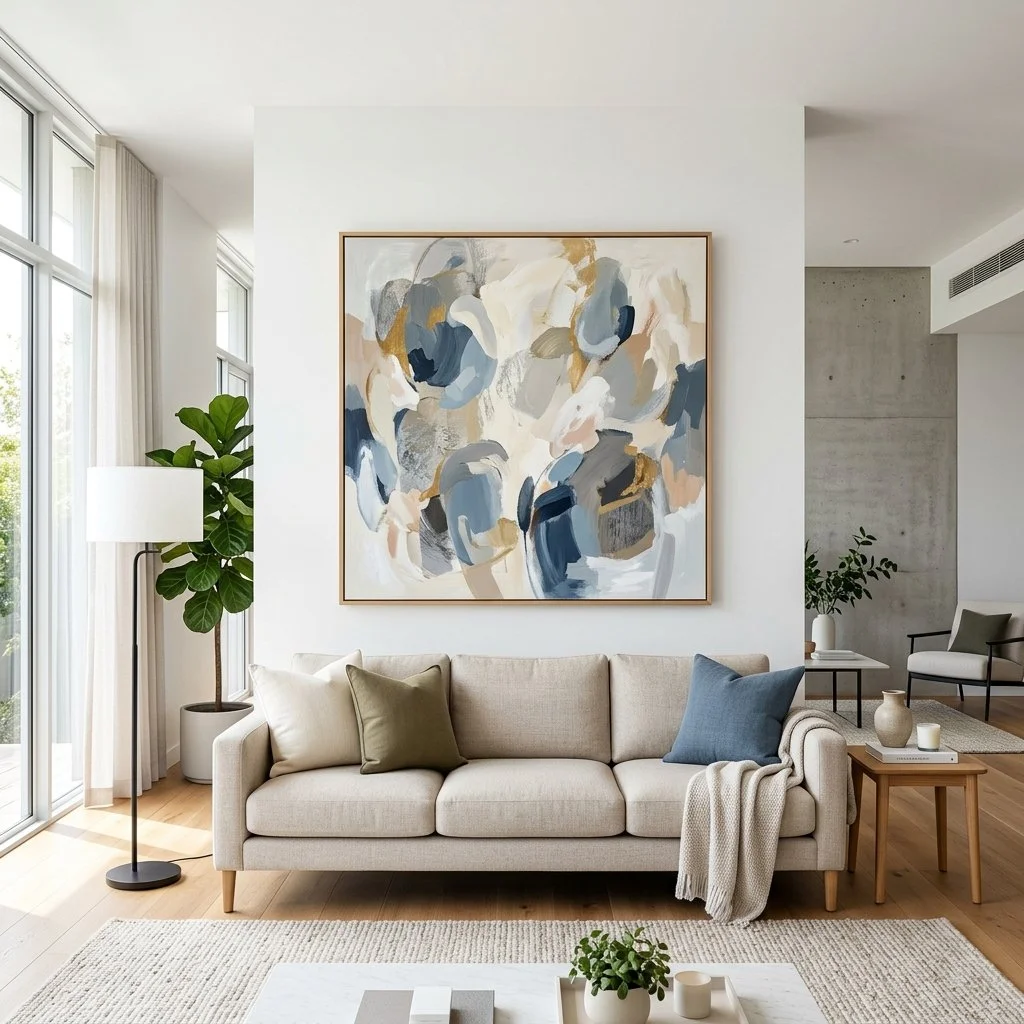
Walk into a gallery, a furniture store or an online marketplace and the price range for wall art is enormous. A print can cost less than a night out, while an original canvas from an established painter can cost more than a used car. Most homeowners land somewhere in the middle without a plan, and that is how a living room ends up with one expensive piece that feels out of place or a dozen cheap frames that never quite come together. A better approach is to start with the wall and work backwards to the budget.
Start With the Wall, Not the Price Tag
Measure before you shop. A common guideline is to hang art over a sofa or bed so the piece covers roughly two-thirds of the furniture’s width. That proportion gives the piece enough presence to anchor the room, while a smaller piece tends to look lost. A 30-inch print above a 90-inch sofa will feel like an afterthought, but the same print above a 40-inch console can look deliberate. Once you know the dimensions you need, the budget question gets easier, because the size of the wall determines the price range you are actually shopping in.
Size Versus Budget
Below a few hundred dollars, money tends to go further on size than on exclusivity. Somewhere around $500 to $700 is roughly where that changes, and above that price point, edition size, the maker, and provenance start to matter more. At the lower end, a large, well-printed piece that fills the wall will almost always look more intentional than a small original that disappears. Large-format prints from retailers such as Crib of Art are one way to achieve that impact without paying original-painting prices, and on a feature wall, scale usually does more for the room than a signature tucked into a corner.
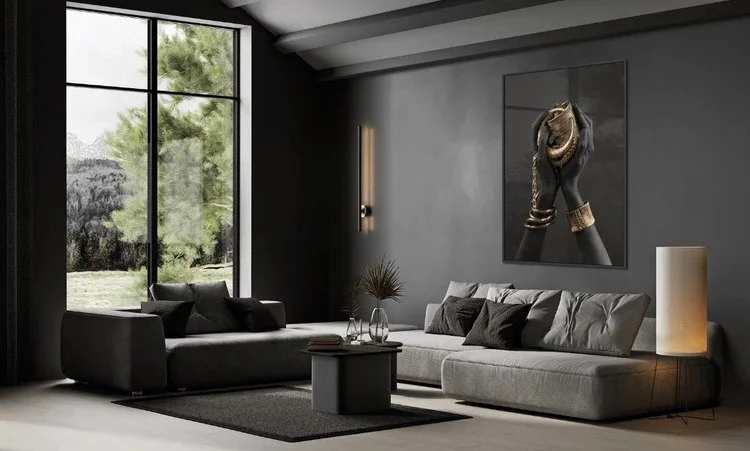
Originals, Prints and What You Are Really Paying For
Price tags often suggest that an original is simply a better image. The research points to something more interesting. A 2012 study by George Newman and Paul Bloom, summarized by the British Psychological Society, found that people valued original artworks more than copies, even when the copies looked almost identical. The value seemed tied to the creative act and to a sense of connection with the artist, not only to how the image looks.
Museum viewing research points the same way, with a nuance. A 2001 study in the journal Perception by Paul Locher, Jeffrey Smith and Lisa Smith found that viewers rated how pleasing paintings were differently depending on whether they saw the real work or a slide or screen image. Viewers with and without art training, however, judged the pictorial qualities of the paintings in much the same way regardless of format. For a buyer, that suggests a good print can carry a piece’s visual structure, while the original tends to carry more of the aesthetic pull. Whether that difference justifies the premium depends on how much the piece will matter to you in your daily life.
Setting a Realistic Budget for Your Household
A budget for art works best when it lives inside the same plan as everything else in the house. Households that already run a simple monthly money routine tend to find it easier to set a fixed amount for decor, and how families can build healthy money habits at home is a useful starting point for that routine. A set amount also prevents impulse buys and leaves room for the one piece that actually matters.
For context on typical spending, the Bureau of Labor Statistics’ Consumer Expenditure Survey tracks what households spend across categories, including furnishings. It is a useful reality check if you want to see how your plan compares with what most households spend.
Before you set a number, answer three questions:
How many walls need art, and what sizes do they require?
Is the piece meant to be a focal point or a background element?
How long will you keep it, and will it move with you if you do?
Matching Art to the Room
A room that already feels warm and settled needs less from its art than a sparse one does. Warm light and a layout that feels intentional do much of the work in a cozy room, and the psychology of a cozy home looks at why those details matter so much. The same qualities that make a space feel comfortable tend to make a piece look like it belongs there. A large canvas over a reading chair, for example, becomes part of the room’s comfort rather than a separate purchase.
Frequently Asked Questions
How much should a first-time buyer spend on art for a living room?
Start by measuring the wall and choosing one large piece in the range that fits it, rather than spreading money across several small frames. Set a number before you shop so you can compare options against the same budget. If that number leaves you with a piece too small for the space, a large print is usually a better fit than a small original.
Is an original painting worth more than a print?
Originals generally carry more value because of the creative act and the connection to the artist, which research on authenticity has explored. Prints can match a painting’s composition and visual structure well, but they often miss texture and some expressive detail. Whether the premium is worth paying depends on how much the piece will matter to you.
Are art prints a good investment?
Most prints do not appreciate the way limited originals from established artists sometimes do. It is safer to buy a print for enjoyment and treat any resale potential as a bonus. If resale matters to you, pay attention to edition size and paper quality, since both affect long-term value.
How can I tell if a print is high quality?
Look for disclosed paper weight, ink type and edition details. Sellers who share these specifications usually take print quality seriously. Ask how the piece is protected from light, since fading is one of the most common long-term issues with prints.
Should I buy art for a rental?
Yes, as long as the piece fits your budget and can move with you. Choose hanging systems that do not damage walls, and favor pieces in frames you can reuse in your next home. A large, lightweight print often works better in a rental than a heavy piece that needs wall anchors.
How many pieces should go on one wall?
One large piece usually makes a stronger statement than several smaller ones spaced loosely. A gallery arrangement works when the pieces share a frame style, a color palette or consistent spacing. Many people start with one anchor piece and build around it over time.
Does placement matter as much as price?
Often it does. Hanging art at roughly eye level and centering it on a sofa, bed or console makes even modest pieces look intentional. Keep the piece out of direct sunlight, which can fade both prints and originals over time.
How often should I update the art in my home?
There is no fixed schedule. Some people rotate pieces seasonally, which spreads the budget out and keeps rooms feeling fresh. Updating one wall at a time is usually more manageable than a full overhaul.
What if I can only afford small pieces right now?
Group them with intention rather than scattering them. Matching frames, a shared color scheme and an even grid can make several small works look planned. Save for a larger anchor piece over time, and let the grouping carry the room until then.
Is it better to buy from a gallery or an online retailer?
Galleries offer expertise and provenance, which can justify higher prices for originals. Online retailers usually offer more accessible prints and clearer pricing. Compare return policies and shipping costs before committing either way.
Art spending works best when it follows the room rather than the price tag. Measure the wall, decide what the piece needs to do, and match the budget to that job. A large print that fills a wall can be the right choice, and an original can be worth the premium when it carries real meaning. Either way, a clear plan helps you spend wisely.
