
What Japan’s Loneliness Crisis Can Teach the Rest of the World
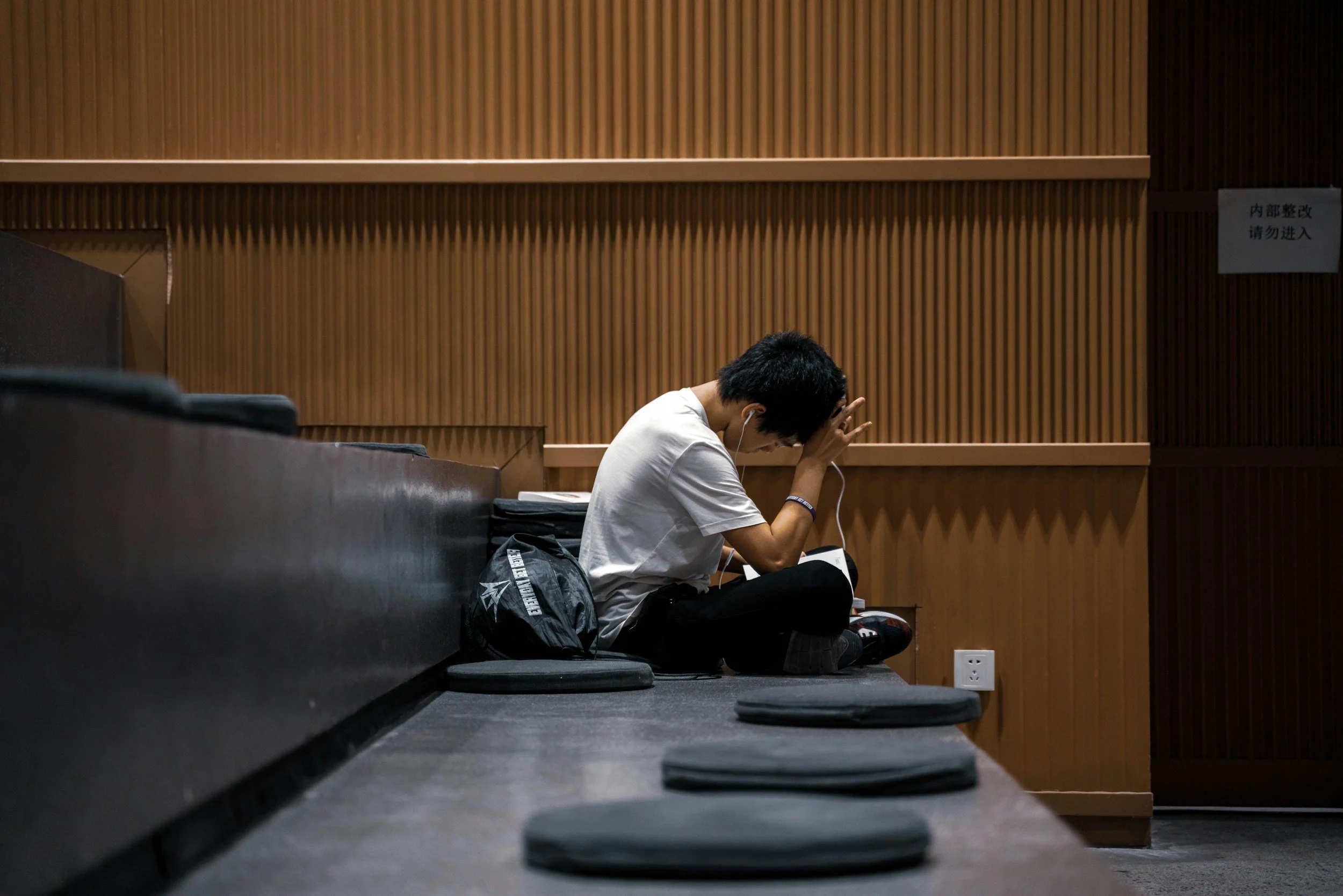
In 2024, Japan’s National Police Agency did something no government had tried at that scale: it counted how many people died alone at home. The total was 76,020. More than three-quarters were 65 or older, and over 4,500 elderly people were not found until at least a month after they died. Neighbours often raised the alarm only because mail was piling up at the door. Grim as these numbers are, what makes Japan’s loneliness crisis worth studying is not only its scale. Japan decided to treat loneliness as a responsibility of the state, not a private misfortune. Other countries are now facing the same pressures, so what Japan got right and wrong is worth a close look.
A problem decades in the making
The Japanese word kodokushi, “lonely death,” entered public conversation in the 1980s. For years it was treated as a sad side effect of an ageing society. That framing turned out to be too narrow.
The demographic trend runs one way. Japan’s National Institute of Population and Social Security Research projects that 10.8 million people aged 65 and over will live alone by 2050, and that single-person households will reach 23.3 million. Families are smaller, children move to cities, and many people never marry. The informal safety net of relatives and neighbours that once noticed when someone stopped answering the door has thinned out.
The COVID-19 pandemic pushed the issue onto the political agenda. Social contact dropped and suicides rose. In February 2021, Japan created a government office for loneliness and isolation and appointed a minister to lead it, following the United Kingdom, which had appointed one in 2018.
From symbolic gesture to legislation
Ministerial titles can be symbolic. Japan went further. In April 2024, a national law on loneliness and isolation came into force. It created a headquarters chaired by the prime minister with every cabinet minister as a member. A priority action plan followed in June, along with a yearly awareness month in May.
This matters because loneliness doesn’t fit inside one ministry. It touches housing, labour, health, transport, and education. A body that sits above departmental lines can do things a single health agency can’t, such as asking why a housing policy keeps elderly tenants stuck in buildings where nobody knows them.
Lesson one: measure it, every year
The least glamorous part of Japan’s approach may be the most useful. Since 2021, the Cabinet Office has run an annual national survey of loneliness, sending questionnaires to 20,000 people aged 16 and older.
The results challenge a few assumptions. In the 2024 survey, around 40% of respondents said they felt lonely at least occasionally. In the survey conducted in December 2025, 4.5% said they felt lonely often or always, and that group was concentrated among people in their 30s to 50s, not the very old. The data also showed that people who rarely share a meal with anyone are far more likely to feel lonely all the time: 17.3% of them reported constant loneliness.
Without measurement, policy runs on stereotypes. Most countries still don’t track loneliness consistently, which means they can’t tell whether anything they try is working.
Lesson two: loneliness is not only about old age
Lonely deaths among the elderly get the headlines, but Japan’s own numbers point to a wider problem. Working-age adults report the most frequent loneliness. Japan also has a large population of hikikomori, people who withdraw from social life for months or years, many of them young or middle-aged.
The lesson for other countries is uncomfortable. If loneliness policy targets only pensioners, it misses the 35-year-old who works remotely, lives alone in a new city, and hasn’t had a real conversation in weeks.
Lesson three: low-tech infrastructure works
Some of the most effective responses in Japan are modest. Postal workers, utility companies, and neighbourhood volunteers check on residents who live alone. Some building managers watch water meters, because a meter that stops moving can signal that something is wrong.
None of this requires advanced technology. It requires that someone has the job of noticing. Japan has also tested high-tech tools, from care robots to AI companions, and they have a place, especially for people who have no one to talk to at all. But the evidence so far suggests that technology works best as a bridge to human contact, not a replacement for it.
Lesson four: the state can’t legislate friendship
Japan’s approach also shows the limits of government action. Even with a law, a cabinet-level headquarters, and annual surveys, the share of people who feel lonely has stayed roughly flat. A ministry can fund community centres, but it can’t make people walk in. It can’t rebuild the extended family or reverse an ageing population.
What policy can do is reduce friction: make it easier to meet people, harder to vanish unnoticed, and less shameful to admit you’re struggling.
Why the rest of the world should pay attention
In June 2025, the WHO Commission on Social Connection estimated that about one in six people worldwide experience loneliness, and that loneliness is linked to roughly 871,000 deaths a year, around 100 every hour. A month earlier, the World Health Assembly adopted its first resolution on social connection. Yet only eight WHO member states had adopted national policies on the issue.
Japan is not a strange outlier. It’s an early example. Its population aged sooner, its household sizes shrank faster, and its cities grew denser. Europe, South Korea, China, and North America are heading the same way.
The main lesson isn’t any single programme. It’s the change in attitude: loneliness stops being treated as a personal weakness and becomes something societies can measure, plan for, and reduce. Japan didn’t solve the problem, but it stopped pretending the problem belonged to someone else.
