
Meth Detox California: What Recovery Looks Like Over Months

The hardest part of coming off meth isn't the first week. It's week six, when you're sleeping again and eating again and still can't feel much of anything, and nobody has told you when that lifts.
That extended timeline is the most important thing to understand about any meth detox california program you're weighing up. Methamphetamine alters the brain's reward system more severely and for longer than most substances, and a program built on a seven-day model tends to send people home right before the difficult stretch begins.
What Meth Does to the Brain
Methamphetamine forces an enormous release of dopamine, far beyond what natural rewards produce. Sustained use depletes those stores and reduces the receptors available to respond, so the system becomes progressively less able to register pleasure from anything else.
Research also indicates meth damages dopamine-producing nerve terminals themselves, which is why recovery here involves repair rather than simple rebalancing. That distinction explains the timeline. You aren't waiting for levels to normalize over a few days. You're waiting for a system to rebuild.
The Timeline in Months
Understanding the shape of this makes the flat stretch survivable, because you know it's a phase rather than your new baseline.
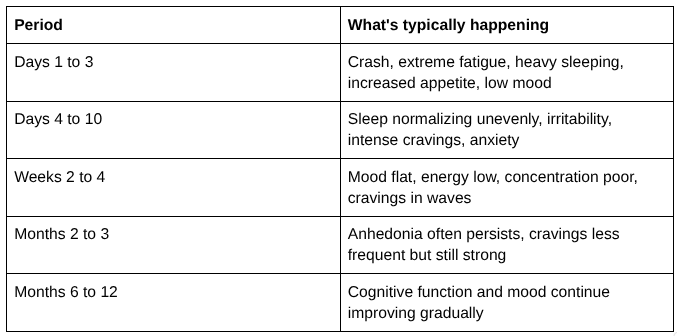
Individual variation is wide, and how long and heavily someone used shapes all of it.
When Psychosis Is Part of the Picture
Meth is distinct among stimulants in how often it produces psychotic symptoms, including paranoia, hallucinations, and delusional beliefs. These can develop during heavy use and sometimes persist into the withdrawal period.
For some people symptoms clear within days of stopping. For others they continue for weeks and require psychiatric treatment with antipsychotic medication. There's also a well-documented pattern where psychotic symptoms can recur during later stress even after long abstinence.
This is a substantial reason to detox somewhere with psychiatric capability rather than at home. Paranoia is difficult to assess in yourself, and family members are rarely equipped to manage it safely.
The Wall, and Why People Relapse There
Weeks four through eight are where most people struggle. The acute symptoms are gone, which means the support usually is too. What remains is anhedonia, low motivation, and the sense that sobriety has delivered a grayer life than the one you left.
That combination is what makes using again look logical rather than impulsive. The person isn't chasing a high so much as trying to feel something ordinary again.
Knowing this window is coming changes how people handle it, which is why programs that extend past detox tend to matter more with meth than with almost anything else.
What Detox Provides
There's no medication that treats methamphetamine withdrawal directly, but a supervised setting does several things that matter.
Medical assessment addresses what heavy use has done physically, including cardiovascular strain, dental damage, skin infections, and severe nutritional depletion. Psychiatric monitoring covers depression, suicidal thinking, and any psychotic symptoms, with medication where clinically indicated. Sleep and nutrition get actively managed, since both are usually wrecked and both influence how quickly the brain recovers.
Structure covers the rest. Meth use is heavily cue-driven and often bound up in specific social circles, and distance from those cues during the earliest weeks gives the recovery process room to start.
If you're having thoughts of hurting yourself during this period, call or text 988 to reach the Suicide and Crisis Lifeline.
Cognitive Recovery Takes Longer Than Expected
Memory problems, difficulty concentrating, and slowed thinking are common early in abstinence and frequently alarm people who assume the damage is permanent.
Imaging studies have shown meaningful recovery of dopamine function with extended abstinence, though it takes many months rather than weeks. Improvement continues well past the point most people stop expecting it, which is worth knowing when month three feels like evidence that nothing is changing.
Beginning With Detox California
If a previous attempt fell apart somewhere around week five, the timing tells you what happened. Detox California provides medically supervised detox on the Southern California coast, with residential treatment that continues through the period where stimulant recovery actually gets hard.
The first call is an assessment. You can ask exactly how long their programming runs.
Frequently Asked Questions
1. How long does meth withdrawal last?
Acute withdrawal generally runs seven to ten days, while low mood, poor concentration, and cravings commonly persist for weeks to months. Cognitive recovery continues gradually over a much longer period.
2. Is meth withdrawal dangerous?
It rarely produces the life-threatening physical complications of alcohol or benzodiazepine withdrawal. The serious risks are severe depression, suicidal thinking, and psychotic symptoms, all of which warrant clinical monitoring.
3. Does meth cause permanent brain damage?
Sustained use damages dopamine-producing nerve terminals, though studies show substantial recovery of function with extended abstinence. Some cognitive effects can persist, and the general pattern is meaningful improvement over months.
4. Why can't I feel anything after quitting meth?
That's anhedonia, caused by a depleted and downregulated dopamine system. It typically improves over weeks to months as the brain recovers, and it's the most common reason people return to use.
5. Can meth psychosis come back after you stop?
Yes. Psychotic symptoms can recur during periods of stress or sleep deprivation even after long abstinence, particularly in people who experienced them during use. Ongoing psychiatric follow-up helps manage that risk.
