
What to Expect on a High-Altitude Trek: A Beginner’s Guide
High-altitude trekking has a way of sounding romantic until the trail tilts upward, the air thins out, and your backpack suddenly feels like it’s carrying bricks. Still, more people are heading outdoors than ever. A record 63.4 million Americans went hiking in 2024, 20.5% of the population ages 6 and older. If you’re thinking about trading local trails for higher mountains, this beginner's guide to high-altitude trekking will help you prepare with more confidence and fewer surprises.
Essential Insights for First-Time High Trails
High-altitude trekking is not just a longer walk with better views. The air, weather, pace, and even your mood can change quickly. Before you lace up your boots, it helps to understand what makes these routes different.
Standard Hikes vs. High-Altitude Routes
On a typical hike, effort often feels predictable. You climb, breathe harder, rest, and keep going.
At altitude, the same effort can feel much tougher because your body has less oxygen available. That is why speed matters less than rhythm. Slow steps, steady breathing, and patience become real trail skills.
Why the Swiss Alps Feel Special
The Swiss Alps have earned their reputation for good reason. You get jagged peaks, glacier views, tidy villages, and trails that are often well marked and carefully maintained.
For beginners, that mix is reassuring. If you want iconic alpine scenery paired with thoughtful planning and organized routes, Swiss Alps trekking can be an excellent choice. You still get the drama of big mountains, but with support systems that make the experience feel more manageable.
Common Beginner Challenges
Most advice on high-altitude trekking for beginners comes back to one point: your body may react before your mind is ready for it.
You might feel breathless, lose your appetite, sleep poorly, or get unusually irritable. Annoying? Absolutely. Uncommon? Not really. When you expect these possibilities, you can respond calmly instead of panicking.
Preparation That Actually Helps
Once you understand how altitude changes the experience, preparation becomes much more practical. You are not training to suffer. You are training so the hard parts feel doable.
Build Endurance Before You Go
Strong legs are useful, but endurance is your best friend. Long walks, stair sessions, uphill hikes, and weekend routes with a loaded daypack can make a big difference.
Good high-altitude trek preparation should also include rest. It is tempting to train hard every day, but recovery is part of getting stronger. Tired legs are one thing. A worn-down body at altitude is another.
Practice Acclimatization Habits
Your body needs time to adjust. Rushing uphill is where many first-timers get into trouble. One study reported that in Lobuche, there was a prevalence of AMS of 25.78% and a severe AMS prevalence of 4.55%. In Manang, there was an AMS prevalence of 14.89% and a severe AMS prevalence of 2.83%.
That statistic is not there to scare you off. It is a reminder to climb gradually, drink regularly, eat even when you are not very hungry, and mention symptoms early.
Get Mentally Ready
Altitude can turn small discomforts into big frustrations. Wet socks feel wetter. A cold morning feels colder. A slow group pace may test your patience.
Before your trip, imagine a few rough moments and decide how you will handle them. A calm mindset can save a day that might otherwise spiral.
Gear and Fuel You’ll Be Glad You Packed
Fitness helps, but gear protects you from the things you cannot control. Cold rain, harsh sun, wind, and fast temperature swings do not care how many stairs you climbed at home.
Dress in Layers
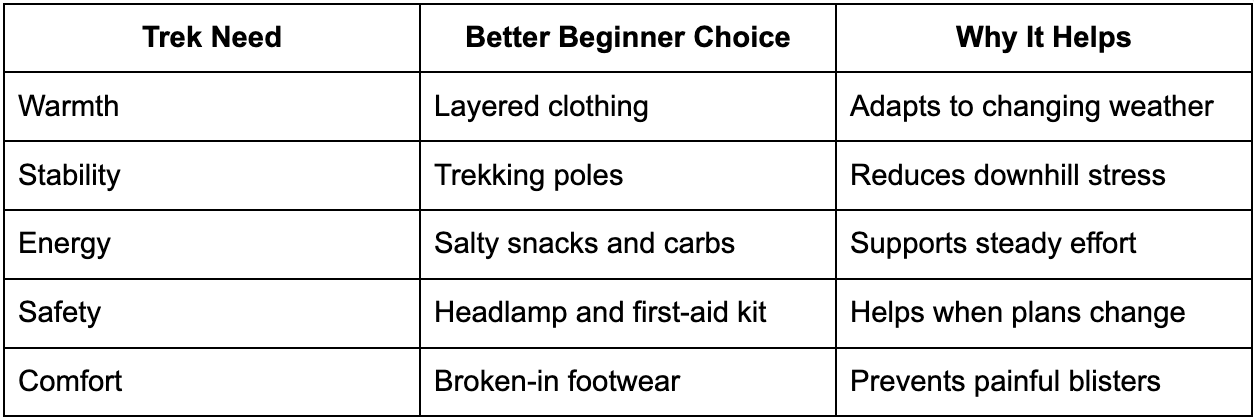
Layering is simple and effective. A base layer moves sweat away from your skin. A warm layer holds heat. A shell blocks wind or rain.
Skip the idea that one bulky jacket solves everything. In the mountains, flexibility wins. The best clothing is often boring because it quietly does its job.
Carry Safety Basics
Your pack should include a headlamp, first-aid kit, sun protection, whistle, and backup power. Trekking poles are also worth considering, especially for long descents that can punish your knees.
Some of the best high-altitude trekking tips are not glamorous: keep your feet dry, protect your skin, and add a layer before you are shivering.
Eat, Drink, and Pack Smarter
At altitude, your appetite may disappear, but your body still needs fuel. Pack salty snacks, simple carbs, nuts, dried fruit, and foods you know you will actually eat.
Think about waste, too. Refillable bottles, durable gear, and low-packaging snacks help keep mountain trails cleaner for the next person.
Even with smart packing, altitude can affect you quickly, so health decisions matter from the first day.
Health and Safety on High Passages
A good trek is not just about reaching the viewpoint. It is about getting there, enjoying it, and coming back safely.
Know Early Warning Signs
Altitude sickness can begin with a mild headache, dizziness, nausea, unusual fatigue, or poor sleep. Do not hide symptoms because you want to “push through.”
Speak up early. Rest, food, fluids, and a slower pace may help. If symptoms get worse, descending can become the safest option.
Follow Group Safety Rules
Stay close enough to your group that someone knows where you are. Respect the guide’s pace, even if you feel strong that morning.
Going ahead may seem harmless, but weather and trail conditions can change fast. If you are trekking without a guide, share your route, understand local rules, and know your exit options.
Insurance, Permits, and Local Rules
Medical travel insurance with evacuation coverage is a smart choice for remote routes. Some regions also require permits, hut bookings, or local guide arrangements.
Sort these details before you fly, not while standing at a trailhead with poor reception and cold fingers.
Daily Trekking Experience at Altitude
Knowing the rhythm of a trekking day helps settle nerves. The unknown feels less intimidating when you can picture the flow.
Morning to Camp Setup
Days often start early with breakfast, packing, and a gentle first climb. The morning air may be cold, but the sun can become intense quickly.
By afternoon, you are usually aiming for a lodge, hut, or camp. Once there, the priorities are simple: change layers, eat, hydrate, and rest. Recovery starts before bedtime.
Weather, Trails, and Culture
When learning what to expect on a high-altitude trek, prepare for sun, wind, rain, and sudden cold in the same day. Trails may shift from smooth paths to rocky climbs without much warning.
You may also meet guides, porters, farmers, hut keepers, and local families. A respectful greeting and a little patience go further than you might think.
Fatigue and Motivation
Multi-day fatigue feels different from being tired after one long hike. Some mornings, you may wake up stiff and doubtful, then feel better after ten minutes of walking.
Break the day into small wins: the next bend, the next snack stop, the next ridge. That little trick works surprisingly well.
Expert Tips for Trekking Smarter
Small choices shape the whole experience. Pace, breathing, hydration, and breaks can decide whether you merely finish or genuinely enjoy the journey.
Pace and Breathing
A pace that feels almost too slow on day one may be exactly right by day three. Take shorter steps, breathe steadily, and use micro-breaks before you feel wrecked.
The most useful high-altitude trekking tips often sound humble. Walk slower than your pride wants you to.
Food, Fluids, and Salt
Drink often, but do not force huge amounts of plain water. Pair fluids with salty snacks or electrolyte drinks, especially when sweating.
Real meals matter for morale. Soup, rice, potatoes, bread, nuts, and dried fruit can keep you going when energy bars start tasting like cardboard.
Apps and Common Mistakes
Offline maps, weather apps, satellite messengers, and shared location tools can be helpful. Just do not let your phone replace judgment. Batteries drain faster in cold weather.
Common beginner mistakes include climbing too fast, packing too few warm layers, skipping meals, and ignoring early symptoms. Most are avoidable with a little discipline.
Swiss Alps Routes and What Comes After
A beginner-friendly region can make your first high-altitude experience feel far smoother. Switzerland is a strong example because it combines dramatic scenery with excellent route options.
Beginner-Friendly Swiss Alps Planning
The Swiss Alps offer hut-to-hut walks, village-based day hikes, guided tours, and private custom routes. That variety lets you choose a trip based on fitness, schedule, and comfort level.
Summer usually gives the easiest trail access. Shoulder seasons can be quieter, though weather may be less predictable.
Recovery After the Trek
Once you descend, give your body what it needs: food, water, sleep, and gentle movement. Stretch lightly and wait before jumping back into hard workouts.
Write down what worked, what rubbed, what you packed too much of, and what you forgot. Future you will be grateful.
Long-Term Benefits
A first high-altitude trek can change how you see yourself. You learn patience, problem-solving, and how to listen to your body.
That is the real value of high-altitude trekking for beginners. The summit view is wonderful, but the confidence you carry home lasts longer.
Ready for Higher Trails
Your first high-altitude trek should challenge you, not overwhelm you. Train steadily, pack smart layers, learn the warning signs, eat and drink with purpose, and move slower than feels necessary. The mountain will not adapt to you, so arrive prepared to meet it well. With the right plan, you will come home tired, proud, and already wondering where to hike next.
Common Questions Before You Climb Higher
Before you book, it is normal to have a few practical questions. Let’s clear up the big ones.
Is it harder to hike at high altitude?
Yes. It usually feels harder because your body gets less oxygen with each breath. Even fit hikers may need to slow down. Steady pacing, gradual ascent, hydration, enough food, and honest symptom checks all help.
What is the best drink to drink at high altitudes?
Water is essential, but electrolyte drinks can help when you are sweating, eating less, or walking for long hours. Warm tea, broth, and diluted sports drinks are useful too. Avoid relying heavily on alcohol.
How should beginners choose a first high-altitude trek?
Choose a route with gradual elevation gain, reliable lodging or camps, clear emergency options, and experienced local support. Avoid extreme itineraries for your first trip. A guided trek can make planning, pacing, and safety much easier.
