
Why CPR Training is an Essential Life Skill for Everyone
When someone drops to the floor at dinner, on a job site, or during a weekend soccer game, the whole room can go silent. It’s a scary kind of silence. People look around, hoping someone else knows what to do.
That “someone” could be you.
Only 41.7 percent of bystanders performed CPR for non-traumatic cardiac arrests in 2024. That number says a lot. It shows how many people still hesitate, not because they don’t care, but because they haven’t been trained.
That’s why CPR training matters. Parents, employees, caregivers, students, coaches, neighbors-we all move through places where emergencies can happen. You don’t need to be a doctor. You just need practice, a steady head, and a basic plan.
The Importance of Cpr in Everyday Emergencies
Real emergencies rarely arrive with warning. One minute everything is normal. The next, someone needs help before paramedics can get there. That’s where the importance of CPR becomes very real, very fast.
Why Location Matters
San Diego is full of movement. Beaches, offices, schools, gyms, parks, restaurants, care facilities, and busy events all bring people together. That’s wonderful, of course. It also means emergencies can happen in just about any setting.
If you live nearby, choosing CPR training San Diego helps you find classes built around local needs. You can get hands-on practice, flexible class options, and training that employers and organizations commonly recognize.
Where Emergencies Actually Happen
Cardiac arrest does not wait for a hospital hallway. It can happen while someone is cooking dinner, sitting in a meeting, cheering at a youth sports field, or standing in line for coffee.
That’s why trained bystanders are so important. They can begin chest compressions, call emergency services, send someone for an AED, and keep the situation moving while every minute still matters.
Safer Communities Start Small
One trained person can calm a room. Two trained people can split the work. A whole workplace, church group, school staff, or family trained together? That creates a much stronger safety net.
Cardiac arrest can happen at home, at work, or in public. Survival rates improve sharply when CPR starts right away. So, let’s look at the specific lifesaving skills you actually build in a class.
Lifesaving Skills Everyone Needs Beyond the Basics
CPR is not just “push hard and fast,” though that phrase is useful in a pinch. Good training teaches repeatable actions: chest compressions, rescue breathing when appropriate, AED use, and how to stay organized under pressure.
Your brain may get rattled in an emergency. Your body remembers practice.
Chest Compressions That Count
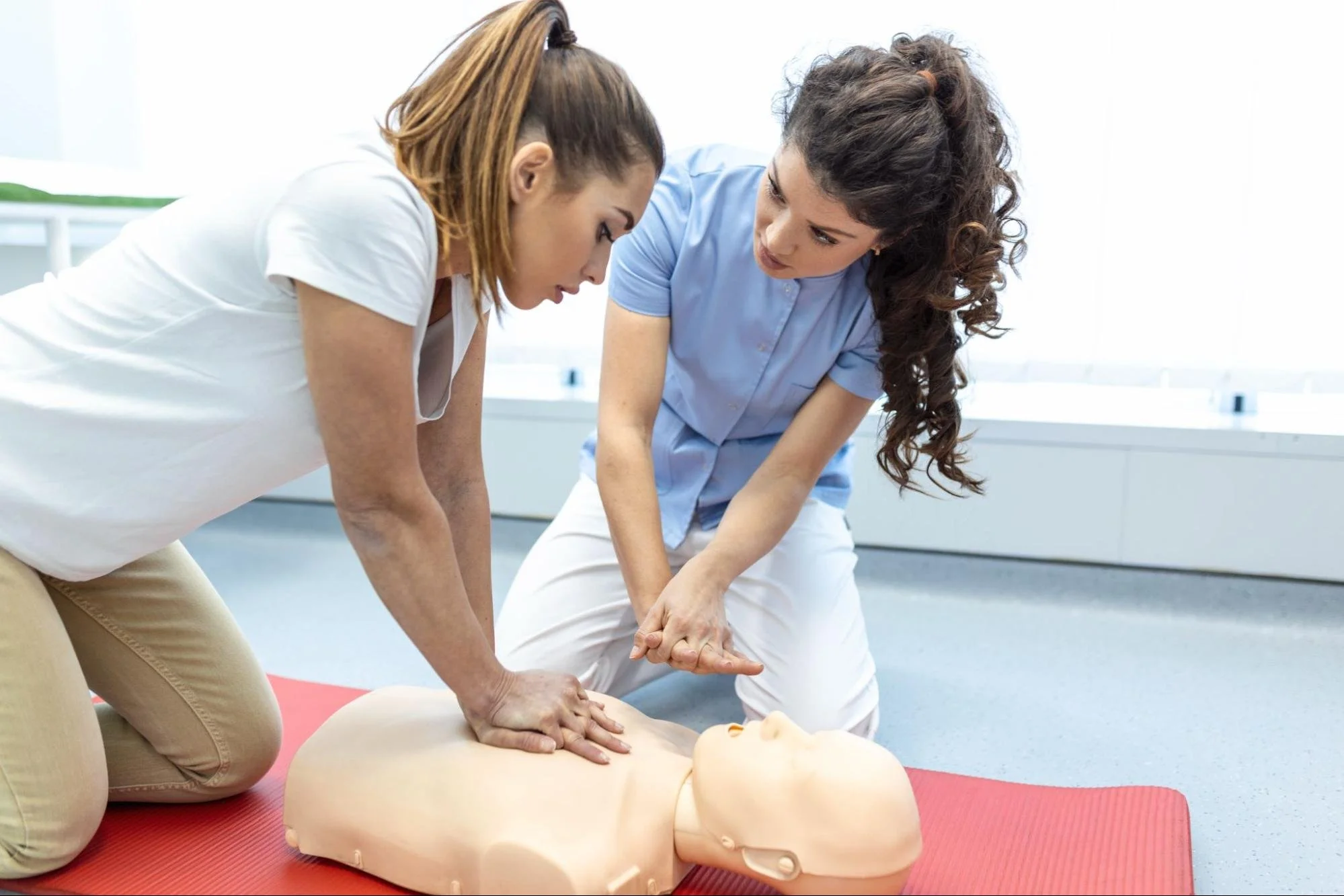
A solid class teaches where to place your hands, how to position your body, how deep to press, how fast to go, and when rescuers should switch. It may sound simple on paper.
Then you try it on a manikin and realize, “Oh. This is why practice matters.”
Aed Use Without Panic
AEDs are made for public use, but plenty of people still freeze when they see one. They worry they’ll press the wrong button or hurt someone.
Training takes away much of that fear. You hear the prompts, place the pads, follow the sequence, and realize the device is designed to guide you step by step.
Calm is a Learned Skill
The emotional part matters, too. A realistic practice scenario helps you speak clearly, assign tasks, and keep going even when things feel chaotic.
Quality training gives you more than a card. It gives you confidence to use these lifesaving skills when the moment is not neat or convenient. Next, let’s talk about why recognized readiness matters for different people and age groups.
Why Recognized Readiness Matters for Every Age Group
When teens, adults, and older adults get certified, preparedness spreads. It moves through families, workplaces, volunteer teams, schools, childcare settings, and elder-care environments.
For some people, training is also required for a job or role. For others, it’s simply peace of mind. Both reasons count.
Certification Turns Practice Into Proof
For many learners, CPR certification is the official proof that they completed approved training and passed required skills checks. It can matter for teachers, coaches, healthcare workers, babysitters, fitness staff, office safety teams, and more.
Compared to people who received no bystander CPR, those who got it within two minutes had an 81% greater chance of surviving and being discharged from the hospital.
That is not a small difference. That is someone getting another birthday, another holiday, another ordinary Tuesday.
Teens, Adults, and Older Adults All Have a Role
Teenagers often learn quickly and bring those skills back to school, home, and sports teams. Adults may use CPR training for work, caregiving, or community safety.
Older adults can participate too. Even if someone cannot kneel or perform deep compressions comfortably, they may still call 911, locate an AED, open a door for responders, or guide another person through the steps.
A Quick Comparison for Learners
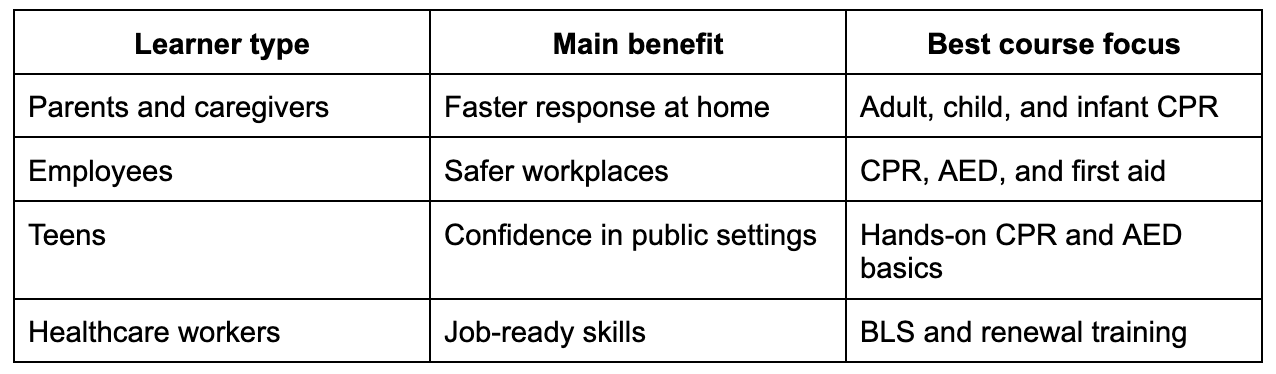
When more people become certified, readiness stops feeling unusual. It becomes part of everyday life. Still, plenty of people hesitate to learn CPR, often because of myths that sound convincing until you look closer.
Myths That Keep People From Learning Cpr
Most resistance comes from misinformation. People worry about legal trouble, physical strength, doing something wrong, or not being “the type” who handles emergencies well.
Let’s clear the air.
“I Might Hurt Someone”
In a true cardiac emergency, doing nothing is often the bigger risk. CPR training teaches safe hand placement, when to begin, when to stop, and how to follow dispatcher instructions.
Is it intense? Yes. But action gives the person a chance.
“I’m Not Strong Enough”
Good CPR is not only about arm strength. It uses body position, locked elbows, and rhythm. Instructors can also explain modified roles for people who cannot kneel, press deeply, or perform every part of the response.
There is almost always a way to help.
“I’ll Get Sued”
Many states have Good Samaritan protections for people who try to help in good faith. Laws vary, so it’s smart to understand your local rules, but fear of being sued should not be the thing that keeps you from learning.
Once those myths lose their grip, the next question is simple: how can CPR education feel more accessible and realistic?
New Ways Cpr Education is Getting Easier to Learn
Training has improved because real emergencies are loud, messy, and stressful. Better tools now help learners practice timing, teamwork, and decision-making before a real crisis happens.
Apps and Feedback Devices
Some manikins give live feedback on compression rate and depth. That is incredibly helpful because you can correct your technique right away.
Apps can also help you review steps after class. Skills fade when they sit unused, so quick refreshers are more useful than people think.
Virtual Practice Scenarios
Some programs use screen-based simulations or virtual reality to place learners in lifelike situations. This does not replace hands-on skills checks, but it can help build comfort before or alongside in-person practice.
Group Learning Helps Memory
Families, school teams, and coworkers often learn better together because they can talk through real routines.
Who calls emergency services? Who grabs the AED? Who meets responders outside? Who keeps children or bystanders back?
Those small decisions matter when the room gets tense.
With more ways to learn than ever, the best choice is a program that fits your needs and leads to real certification.
Final Thoughts on Cpr as a Life Skill
CPR is one of those skills you hope you never need. Still, if the moment comes, you will be grateful you learned it.
It helps you act faster, think more clearly, and protect the people around you. A class can turn fear into motion and hesitation into help. Whether you are a parent, student, founder, coach, caregiver, coworker, or neighbor, learning CPR is a practical way to care for your community.
Readiness is quiet most days. Then, one day, it may save a life.
Common Questions About Cpr Training
What Are 10 Important Facts About Cpr?
CPR buys time; fast action matters; compressions are key; AEDs are safe; training builds confidence; children can learn; refreshers help; rescue breathing may be taught; dispatchers can guide you; practice improves response.
Does Cpr Work for Everything?
No. CPR is mainly for cardiac arrest when someone is unresponsive and not breathing normally. It does not treat choking, stroke, seizure, overdose, or bleeding by itself, though related first aid training may cover those emergencies.
How Often Should I Renew My Cpr Certification?
Most certification cards need renewal every two years, but job rules can vary. Even if your card is current, brief refreshers are wise because timing, hand position, and confidence can fade faster than expected.
