
Everyday Habits for Better Focus, Balance, and a Healthier Lifestyle
When your daily actions fit your body’s natural patterns, productivity and mental health no longer need to compete. Simple practices-such as drinking water after waking, taking planned breaks, getting morning sunlight, and using functional botanicals like Circle Focus Mushroom Gummies with care to support mental flow-can create a steady base for busy days.
What Everyday Habits Improve Focus, Balance, and Health?
The habits that support physical health and clear thinking work with the body instead of against it. Long-term health depends on regular care: feeding your body whole foods, staying active, attending routine medical visits, and protecting your emotional energy. In a busy life, well-being is shaped by daily choices that affect how your body feels, how your nervous system handles stress, and how even your mental energy stays throughout the day.
Behavioral health research repeatedly shows that regular practice works better than extreme effort. Planning to do hard workouts every day or cutting out large groups of foods often ends in burnout and exhaustion. Simple actions-such as stepping into daylight, drinking water before coffee, or combining movement with quiet time-build their effects slowly. Over time, they help keep the body and mind steady and may reduce the chance of long-lasting fatigue.
How Small Daily Actions Support Energy, Attention, Mood, and Long-Term Health
Small daily actions can have a strong effect on brain and body function. Drinking a large glass of water after waking replaces some of the fluid lost during sleep and may support digestion, alertness, and mental performance. Gentle stretching for five minutes before or after getting out of bed warms the muscles, improves circulation, and helps the body wake up in a calm way.
Small changes can also affect hormones and brain chemicals. Light movement encourages the release of chemicals linked with a better mood, while balanced meals help prevent sharp rises and falls in blood sugar. Over many months and years, these small habits may lower body-wide inflammation, support healthy metabolism, and help protect memory and thinking ability as you age.
Build a Morning Routine That Prepares Your Mind and Body
The first hour and a half after waking often sets the mood for the rest of the day. A rushed morning filled with loud alarms, hurried preparation, and instant digital input can put the brain into a tense, reactive state. A calm morning sequence can support clearer thinking and physical energy well into the afternoon.
Your routine does not need to take two hours or feel strict. Link a few useful actions to things you already do, such as stretching your back after brushing your teeth or drinking water while tea brews. Connecting habits in this way reduces the number of choices you need to make and leaves more mental energy for creative or demanding work.
Use Natural Light and Movement To Support Alertness
Morning outdoor light is one of the body’s strongest signals for wakefulness. Going outside or standing near a bright window within an hour of waking helps reset the main body clock, which is located in a brain area called the suprachiasmatic nucleus. This light reduces melatonin, supports the normal morning rise in cortisol, and helps set the timing for sleep later that night.
Pairing light with gentle movement can make the effect stronger. You do not need a hard workout at sunrise. A ten-minute brisk walk, light mobility work, or dynamic stretching can reduce stiffness and increase blood flow to the brain. Sunlight and movement often clear morning fog more reliably than reaching for caffeine right away.
Set Daily Priorities Before Checking Messages or Social Media
Checking your phone as soon as you wake gives outside demands control of your attention. News alerts, work emails, and social media feeds fill the brain with scattered information and can create low-level stress. Research links heavy, interrupted digital use with more attention lapses and mental tiredness.
Before looking at a screen, spend five quiet minutes choosing your main goals. Pick one to three tasks that would make the day feel successful if completed. Setting these goals while your mind is still clear helps you guide your attention instead of spending the whole day reacting to other people’s requests.
Protect Your Focus During Work, Study, and Screen Time
Work and school often place a heavy demand on attention. Message alerts, open-plan offices, and too many browser tabs make deep concentration harder to find. Protecting your focus calls for clear limits around your space, devices, and work pace.
Mental control is limited. It becomes tired when you keep switching between tasks. Multitasking does not let the brain do several things at once; it makes the brain move quickly from one task to another. Some attention stays attached to the previous task, a problem researchers call attentional residue. Strong, creative work is easier when you create firm boundaries around work time.
Choose One Priority and Reduce Avoidable Distractions
Clear thinking starts with choosing what matters most. When you begin work or study, select one well-defined task. Close unrelated browser tabs, silence computer alerts, and place your phone in another room or inside a drawer. Even a silent phone nearby can use some working memory, so keeping it out of sight can help protect attention.
If your mind wanders during focused work, that does not always mean you are failing. Some thoughts interrupt the task, while others help with useful reflection or new ideas. If an unrelated thought or chore appears, write it on a paper notepad and return to it later. This quick note frees mental space without pulling you into online distractions.
Use Timed Focus Sessions With Regular Short Breaks
Attention naturally moves through periods of effort and recovery. Trying to focus for four or five hours without stopping usually leads to lower quality work, frustration, and more mistakes. Timed sessions-such as 25 to 50 minutes of focused work followed by a planned break-fit better with the brain’s natural rhythm.
What you do during a break matters. A pause of a few seconds may ease physical strain, but deeper mental recovery requires stepping away from the task. Leave your computer, look through a window, or do a little light movement. Try not to spend the break scrolling through social media, since this adds more information for the brain to process.
Move Every Day to Improve Energy and Brain Health
The human body and brain developed with regular, varied movement. In a mostly seated lifestyle, exercise supports more than physical appearance. It also helps the brain. Physical activity supports the growth of new brain cells, improves blood flow to the brain, and encourages the release of substances that help memory and flexible thinking.
Movement can also help manage emotions. Exercise gives the nervous system a way to release some of the stress that builds during demanding mental work. Rather than using up all your energy, regular movement can increase daily vitality and help guard against ongoing tiredness.
Aim for at Least 150 Minutes of Moderate Activity Each Week
Public health guidance recommends at least 150 minutes of moderate aerobic activity each week. This can be reached with 30 minutes of activity on five days. Brisk walking, cycling, swimming, and dancing can raise your heart rate and breathing while supporting the heart, blood vessels, and brain areas involved in memory.
Outdoor exercise, sometimes called “green exercise,” may provide added benefits. Studies show that walking or working out in natural areas can lower anxiety, heart rate, and mental fatigue more than similar exercise indoors or beside busy concrete streets. Even short visits to a local park can help a stressed mind recover.
Take Walking Breaks Instead of Sitting for Long Periods
Sitting for long, uninterrupted periods can harm metabolic and blood vessel health, even if you exercise later in the day. Hours in a chair slow blood return from the legs, tighten muscles, and may reduce alertness by lowering overall circulation. Over time, long periods of sitting can contribute to physical sluggishness and mental irritability.
Break up desk time with short walks each hour. Stand during a phone call, walk across the room, or refill your water glass. Studies show that walks lasting two to five minutes can sharpen mental control and help the body manage blood sugar after meals. Frequent, easy movement plays a major part in steady mental performance.
Eat and Drink for Steady Energy
Food and fluids supply the materials the body uses to make brain chemicals and maintain cellular energy. Meals built mostly from highly processed carbohydrates and artificial ingredients can cause blood sugar to rise quickly and then fall sharply. These changes may appear as afternoon brain fog, mood swings, and strong cravings.
Healthy eating does not need to be strict or restrictive. It can provide a steady supply of fuel for the brain. Choosing foods that are rich in nutrients and close to their natural form also supports the gut microbiome. The gut communicates with the brain through the vagus nerve and immune system, and this connection can affect mood and mental control.
Combine Protein, Fiber, Healthy Fats, and Whole-Food Carbohydrates
Meals that support steady energy include several types of nutrients. Build each plate around lean protein, such as poultry, fish, eggs, tofu, or beans; fiber-rich vegetables; healthy fats from foods such as olive oil, avocados, or seeds; and complex carbohydrates that have not been heavily refined. Eating a good source of protein within two hours of waking may help keep morning blood sugar steady and reduce later energy drops.
The same balance can help with snacks. When afternoon hunger appears, choose unsalted nuts and seeds-such as walnuts, almonds, cashews, or pumpkin seeds-instead of pastries or packaged chips. These foods provide healthy fats, vitamin E, and minerals that support cell protection and clear nerve communication.

Limit Excess Alcohol, Sugary Drinks, and Highly Processed Snacks
Sugary drinks, energy drinks, and highly processed snacks may create a quick feeling of energy, but they often lead to a fast crash. This can harm concentration and increase irritability. Using large amounts of caffeine late in the day to overcome tiredness can also interfere with nighttime sleep and create a repeating cycle of fatigue and stimulation.
Alcohol can also interfere with recovery. An evening drink may feel relaxing, but alcohol can interrupt REM and deep sleep, remove fluid from the body, and raise the heart rate during the night. Limiting alcohol and highly processed foods supports digestion and clearer thinking the next morning.
Sleep Well to Restore Focus and Balance
Sleep is the body’s main period of repair. The sleeping brain remains active. Its glymphatic system helps remove waste products that build up during the day. Good sleep also strengthens new memories, steadies emotional reactions, and restores energy throughout the body.
Too little sleep quickly harms attention, working memory, and the ability to handle stress. Long-term studies show that the benefits of exercise and healthy food can be reduced when sleep regularly falls below a healthy amount. Protecting sleep is one of the strongest habits for long-term brain health and clear thinking.
Keep a Consistent Sleep and Wake Schedule
The body clock depends on regular timing. Changing your bedtime and wake-up time sharply between weekdays and weekends can create "social jetlag." This means your inner clock and daily schedule are out of sync. This pattern has been linked with metabolic problems, low mood, and ongoing daytime mental difficulties.
Try to go to bed and wake up at about the same time each day, including weekends. A regular schedule helps steady your body clock, making it easier to fall asleep and wake up without a long struggle. Building a small evening ritual around that fixed bedtime makes it easier to stick to — some people pair it with a calming supplement such as the magnesium or sleep gummies from Circle Organics, simply because taking something at the same hour each night acts as a cue that the day is winding down.
Aim for 7 to 9 Hours of Sleep When Possible
Most adults need seven to nine hours of quality sleep each night to support strong thinking and immune health. Getting fewer than seven hours on a regular basis creates a growing sleep debt. This can harm judgment and reaction speed in ways similar to mild alcohol impairment, even when you do not notice how tired your performance has become.
Support better sleep by setting aside time to wind down. Turn off phones, computers, and bright overhead lights 30 to 60 minutes before bed. Lower exposure to blue light can help the body make melatonin naturally. Keep the bedroom dark, quiet, and cool enough to support the body’s normal nighttime drop in temperature.
Use Simple Practices to Lower Daily Stress
Stress is part of an active and meaningful life. Short periods of manageable stress can sharpen attention and prepare the body to act. Stress that continues without relief keeps the sympathetic nervous system active. High levels of stress hormones can weaken immune function and make it harder for the prefrontal brain areas to manage decisions and emotions.
Managing stress does not mean removing every challenge. It means helping the nervous system slow down after tension rises. Adding short pauses that involve the body can build resilience and reduce the risk of physical and emotional exhaustion.
Take Slow Breathing Breaks When Tension Increases
During stress, breathing often becomes quick and shallow, with most of the movement in the upper chest. This pattern can tell the brain that danger is present. You can interrupt it with slow, deep breathing. Taking two minutes to breathe from the diaphragm, with longer exhales, can activate the vagus nerve and encourage a calmer state.
Alternate-nostril breathing and box breathing are two options. Alternate-nostril breathing uses one nostril at a time and encourages slow, controlled breaths that may steady the heart and quiet racing thoughts. Short breathing breaks during the workday can lower sudden anxiety and help you think more clearly.

Schedule Hobbies, Rest, and Enjoyable Activities
Rest is a basic body need, not something you must earn after finishing every task. Clinical research links active hobbies with better mood, stronger emotional coping, and lower rates of depression over time. Gardening, painting, reading fiction, playing music, and woodworking can all provide a place to focus on something enjoyable and separate from daily pressure.
Short afternoon naps may also help some adults. Research suggests that naps under 30 minutes, taken early in the afternoon, can support memory and mental performance without causing much grogginess or affecting nighttime sleep. Planning time for play, quiet rest, and meaningful contact with other people can help maintain emotional balance during busy periods.
Support Preventive Health Through Routine Care
Daily habits support health, but they work alongside medical care. Some people assume that healthy food and regular exercise remove the need for checkups. Good preventive care combines everyday habits with regular support from health professionals.
Conditions such as high blood pressure, high fasting blood sugar, and unhealthy cholesterol levels may harm blood vessels and brain tissue for years without clear symptoms. Regular medical care can find these problems early, before they cause major disruption.
Keep Recommended Screenings, Vaccinations, and Health Appointments
Schedule regular wellness visits, cancer screenings suited to your age and risk level, vision checks, and blood tests. Tracking blood pressure, cholesterol, and hemoglobin A1c gives you useful information about how your habits affect heart and metabolic health. These results can guide early changes in daily habits or medical care.
Daily preventive care also includes oral hygiene. Research connects long-term gum inflammation with blood vessel problems and higher risks to brain health. Floss each day by wrapping the floss around your middle fingers, shaping it into a gentle C around each tooth, and moving it up and down to clean below the gumline. Avoid rough sawing motions that can hurt the gums. In the morning, use a broad-spectrum facial sunscreen with SPF 30 or higher to help protect skin from ultraviolet damage.
Track the Benefits and Risks of Lifestyle Changes
Changing daily habits works best with honest self-observation. Healthy changes should improve your energy and well-being, not create strict rules or constant worry about perfection. Tracking how you feel and what you do can show progress and point out habits that need adjustment.
Behavior change often moves through several stages: contemplation, when you think about changing; preparation, when you plan; action, when you practice the new habit for up to six months; and maintenance, when the habit becomes part of your long-term routine. Knowing your current stage can help you set practical goals and avoid becoming discouraged too soon.
Measure Focus, Sleep Quality, Mood, Movement, and Energy
To see how your routine affects you, record a few simple measures from time to time. A short daily journal or health app can help you notice changes in key areas:
Cognitive Focus: Record how long you can work without distractions before mental tiredness begins.
Sleep Quality: Track how long you sleep, how quickly you fall asleep, and whether you wake refreshed or groggy.
Mood and Resilience: Notice your usual level of calm and whether small delays or stressful events quickly make you irritable.
Physical Movement: Record daily steps, active minutes, and whether your body feels loose or stiff.
Sustained Energy: Watch for sharp afternoon crashes or steady energy that lasts into the evening.
Small improvements can provide useful encouragement. You may feel calmer during stress, wake a few minutes before your alarm, or finish a project in fewer work sessions. These signs can help new habits become more automatic.
Avoid Extreme Dieting, Overtraining, Sleep Restriction, and Excessive Caffeine
The desire to improve can sometimes lead to doing too much. Severe calorie restriction, cutting out whole nutrient groups without medical advice, and punishing exercise schedules place heavy strain on the body. They can raise stress hormones and slow metabolism. Good health depends on balance and enough nourishment, not harsh rules.
Giving up sleep for extra work or intense early workouts also works against your goals. Hard exercise combined with too little sleep can remove many of exercise’s brain benefits and speed up exhaustion. Continually increasing caffeine to cover deep tiredness may cause anxious feelings, raise resting blood pressure, and damage the sleep needed for real recovery.
Create a Personal Plan for Better Focus, Balance, and Health
Changing your lifestyle does not require a sudden total overhaul. Trying to change your diet, exercise plan, bedtime, and work system at the same time can create decision fatigue and make you give up after a few weeks. Long-lasting change usually comes from adding small habits one at a time.
Start with one small habit in each main area of daily life. Each action should be easy enough to complete even on a busy or tiring day. Making the first step simple helps build confidence and steady progress.
Select One Morning, Movement, Nutrition, Sleep, and Stress Habit
Use the guide below to choose one realistic action from each area:
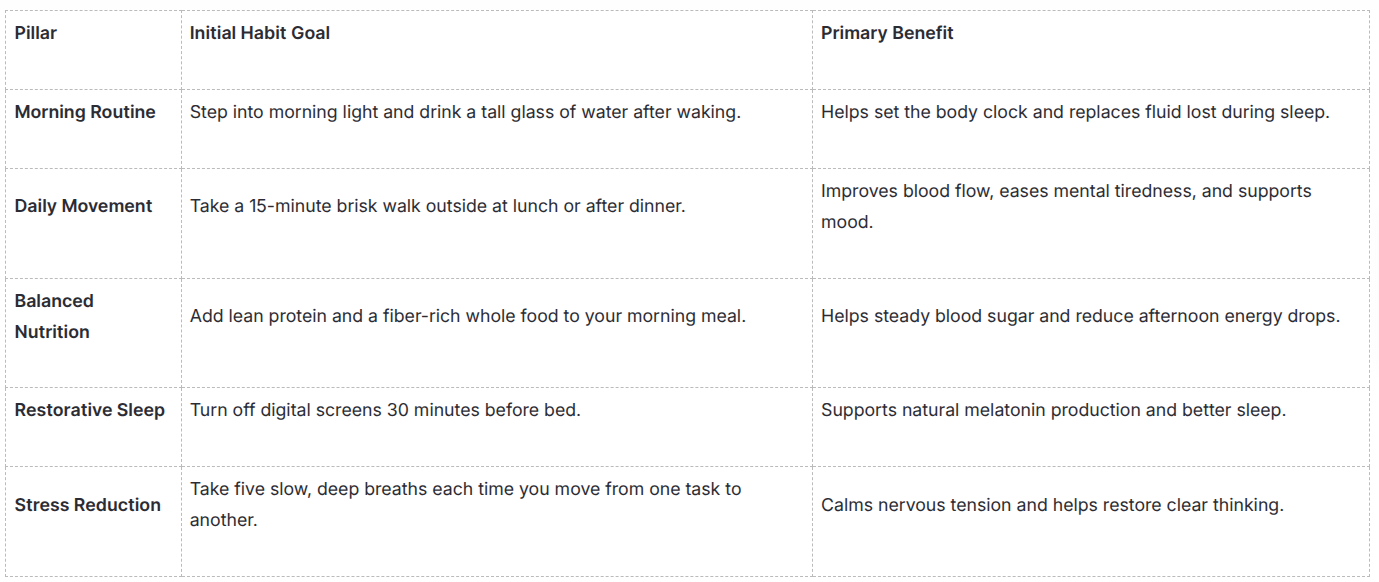
Connect each action to something already in your schedule. For example, take five deep breaths after closing your laptop for lunch, or drink water as soon as you enter the kitchen. Linking a new action to a familiar event helps it become part of your normal routine.
Review Progress Weekly and Make One Adjustment at a Time
Set aside five minutes at the end of each week to review your habits. Ask what felt easy, what caused problems, and how your focus and physical energy changed. If a habit feels too hard or creates too much resistance, make it smaller until it is easy to repeat.
Use a long-term, flexible approach. After a habit feels natural and has become part of your routine-often after several weeks-you can add one more small change. Focus, health, and emotional balance are ongoing practices, not goals you complete once and leave behind.
As you adjust your plan, pay attention to your surroundings and relationships. Quiet walking routes with mature trees, a clear separation between your work area and rest area, and supportive people can all help protect mental strength. When your environment supports your habits, staying focused, healthy, and grounded becomes easier each day.
