
Your Kid and Your Rabbit Are Running the Same Scam
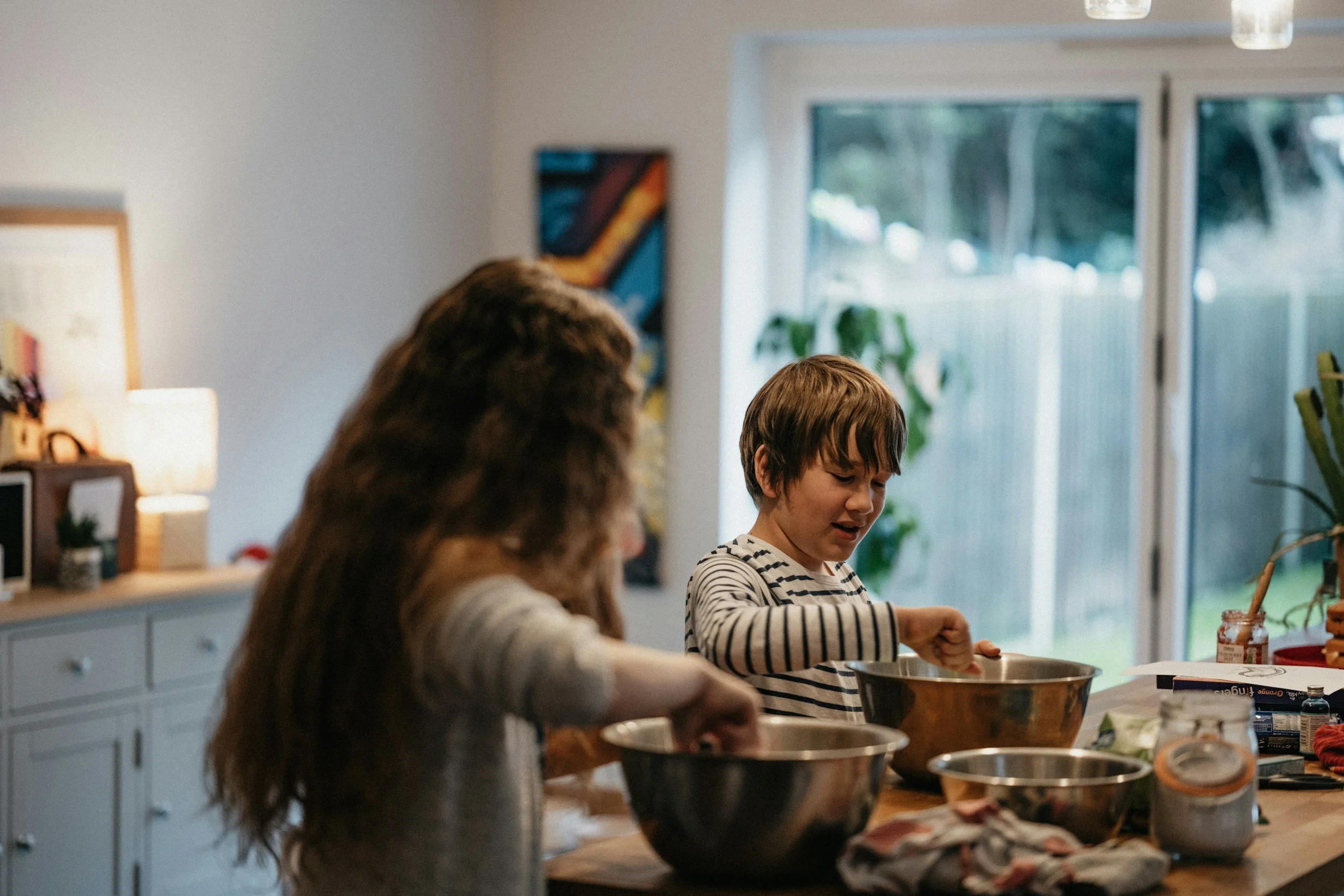
Hand a kid a bowl of trail mix and watch what happens. The M&M's go first. Then the banana chips. What's left in the bowl forty seconds later is a small pile of raisins and the peanuts nobody wanted, and your child will look up and tell you, with total sincerity, that they finished it.
Now go watch a rabbit eat from one of those colorful mixed bags of food. Same movie. The flaked corn and the little dried peas vanish first. The plain fibrous pellets sit there, untouched, right up until you top the bowl back up and reset the whole game.
Nobody's being naughty in either scene. Both of them are doing something completely rational with the setup they were handed. Which is worth thinking about, because the fix turns out to be the same in both cases, and it has almost nothing to do with willpower or lecturing.
The bowl is doing the parenting
Here's the thing about a mixed bowl. It hands over a decision. Once there's variety in front of them, somebody has to choose, and neither a six-year-old nor a rabbit is going to choose the boring high-fiber option when the sweet crunchy one is sitting three inches away.
We tend to read that as a character problem. Picky. Stubborn. Won't eat what they're given. But the choice was baked into the bowl before anyone sat down. Put a mix in front of a creature that likes sugar and starch, and you've essentially guaranteed the outcome. The bowl made the decision. You just watched it happen and got annoyed.
Which puts the leverage somewhere other than the table. It sits back at the moment you decided what was going in the bowl in the first place.
What happens when the rabbit wins
Rabbits make the consequences unusually easy to see, because their whole body runs on the boring part. Their teeth grow continuously for their entire lives and only stay in check by grinding on rough fibrous food. Skip the fiber and the teeth just keep going. Researchers at the University of Edinburgh fed groups of rabbits different diets for 17 months and tracked what happened, and the connection between muesli-style mixes and dental problems showed up clearly enough that those mixes largely got pulled from shelves afterward. The rabbits eating the fun colorful stuff were developing bad teeth. Not because the mix was poison, but because they kept picking around the part that mattered.
A kid's version of this runs slower and quieter. Nobody's teeth curve sideways because of the marshmallow cereal. But the mechanism is identical. Given the option, they eat the fun part and skip the part doing the actual work, and they do it every single day for years.
The uniform bowl trick
With a rabbit, there's a genuinely elegant solution, and it's almost funny how simple it is. You give them food where every single piece is the same. A timothy-based pellet with measured portions is uniform all the way through, so there's nothing to pick around and nothing to leave behind. The choice disappears. The rabbit eats what it's given because what it's given is one thing.
The portion is small on purpose, roughly a quarter to a half cup a day for an average adult rabbit, because the real foundation of their diet is unlimited hay. The pellets just carry the vitamins and minerals. But the principle holds regardless of the amounts. Remove the option and the picking stops.
There's obviously no uniform pellet for seven-year-olds, and there shouldn't be. Kids need variety, they need to learn to like things, and a childhood of identical beige nuggets would be its own kind of sad.
But you can borrow the logic without borrowing the pellet.
Borrowing the logic for humans
The move is to make your decisions earlier, at the grocery store and the pantry, instead of later at the dinner table where you're outnumbered and tired.
Cereal with candy in it becomes a selective feeding machine the second it enters the house, and no amount of standing over someone changes that. The same goes in the other direction. If you want a kid eating salmon, the work happens on the shopping list and in the pattern of putting it on the table again and again, which is roughly the argument behind figuring out which fish are actually worth eating before you start negotiating with anyone about it.
There's a companion trick worth stealing here. A rabbit's hay is unlimited, free, and profoundly boring, and they put away piles of it anyway, mostly because it's the thing that's always there. The human version is a bowl of clementines on the counter at four in the afternoon. Availability plus hunger does more work than any speech about nutrition ever has, and it costs you nothing except the counter space.
Timing is the other lever almost nobody pulls. The hungriest your kid will be all day is the moment they walk in the door, and that window goes badly underused. Whatever's sitting out right then tends to get eaten without comment. The identical food offered at 6:45, when everyone's fraying, turns into a standoff. Move the vegetables to 3:30 and watch a problem quietly evaporate.
Serve the components separately if that helps. Put out the thing you want eaten when they're hungriest, which is usually right when they walk in the door and not at 6:45 when they're melting down. Stop stocking the item you find yourself policing. None of this is glamorous, and all of it works better than talking.
Why the lecture backfires
The instinct, when a kid picks around their food, is to lean on them. Just three more bites. Finish your soup. It feels like the responsible move, and it reliably goes the wrong way. In one experiment with preschoolers, researchers compared meals where kids were pressured to finish against meals where they weren't, and the finding on pressuring preschoolers to finish their food was that the pressured kids ate less, not more, and made more negative comments about the food while they were at it. You can spend a whole dinner turning a vegetable into an enemy.
There's a real relief buried in this. If the bowl is doing most of the parenting, then a kid picking around dinner stops being a verdict on them, or on you. It becomes a design note. Design notes get fixed on Sunday with a shopping list. Character flaws can't be fixed at all, largely because there wasn't one there to begin with.
The rabbit can't be lectured at all, which is clarifying. There's no version of parenting a rabbit where you explain the importance of fiber, and it nods thoughtfully. All you get to control is what's in the bowl. Somehow that constraint produces better results than the full toolkit of persuasion we bring to our children.
And when the kid does eat the thing, the response matters more than you'd guess. Naming what they actually did lands differently than declaring them a good eater, for the same reason praise aimed at effort and process holds up better than praise aimed at who somebody is. Good eater is an identity, and identities are fragile things to hang on a plate of green beans.
The uncomfortable part
If you keep pulling this thread, it stops being about kids and rabbits pretty quickly.
Everybody picks around their bowl. The snack drawer at the office is a mixed bowl. So is the route home that happens to run past the drive-through, and so is a phone with everything on it sitting face-up on the nightstand. Adults just have better vocabulary for it and call it a rough week.
Willpower is real enough. The trouble is that it's expensive, and asking a six-year-old to spend theirs on the raisins is a bet you'll have to place again tomorrow, and every day after that. Designing the bowl costs you one decision at the store.
So next time you're watching the M&M's disappear, resist the urge to say anything. Just take a good look at what's left in the bowl. That's your list. That's the whole thing.
