
December 2025

Science-Based Incentives For A Healthier 2026
As we head toward 2026, the data keeps pointing to one simple fact: your daily habits are the strongest predictors of how healthy, capable, and resilient you’ll be a decade from now. Longitudinal studies show that consistent, healthy lifestyle practices can reduce the risk of chronic disease by up to 80% and extend healthy lifespan by 7-14 years.
The six dimensions of health that I regularly come back to are: regular movement, quality sleep, nutrient-dense eating, effective stress management, an adaptive mindset, and strong social ties.
I like to think of the six dimensions of health as a blueprint for becoming harder to kill, more energized, and more present in everyday life. Here are some of my favorite research-backed reminders from each pillar.
Movement
Hit The Bare Minimum: Adults who meet basic activity guidelines have about a 35% lower risk of dying from any cause than inactive adults.
Lift Something: A meta-analysis of cohort data found that any resistance training reduced all-cause mortality by 15%, cardiovascular disease mortality by about 19%, and cancer mortality by about 14%; the frame of ~60 minutes per week of lifting showed the greatest benefit (~27% risk reduction).
Walk More: Newer work on steps suggests that people who average around 9,000 to 10,500 steps per day have about 39% lower risk of early death and more than 20% lower risk of heart attack or stroke compared with those who take about 2,000 steps.
Nutrition
Get Your Protein: A 2022 meta-analysis concluded that increasing daily protein intake (especially among people doing resistance training) produces small but consistent gains in lean body mass and lower-body strength. Aim for 0.8g/pound of desired body weight.
Eat Less Processed Foods: A large recent review found that high consumption of ultra-processed food (UPF) is associated with increased risk of cardiometabolic diseases, obesity, type 2 diabetes, and other chronic health issues.
Consume Enough Fish Oil: A landmark study found that people with higher omega-3 levels had a 33% lower risk of early death and lived about 10% longer, with low levels predicting mortality as strongly as smoking.
Sleep
Keep Your Sleep Routine Steady: A study of more than 88 thousand adults showed that poor sleep was linked to 172 diseases. Almost half of the risk came from irregular sleep timing, not just how long people slept. Researchers suggest that staying consistent with sleep may be as important as good nutrition and regular exercise.
Sleep > 6 Hours Per Night: In a study of nearly 4,000 adults, those who slept under 6 hours were 27% more likely to have atherosclerosis compared with people who slept 7-8 hours. Poor sleep quality increased the risk even more, by 34%.
Turn Off The TV (And Lights): In a large study, sleeping with a TV on meant a 38% higher rate of short sleep, a 55% higher rate of inconsistent sleep timing, and a 58% higher overall poor-sleep score.
Stress Management
Mange Work Stress: A long-term study of more than 10,000 workers found that people who experienced high work stress over many years were more than twice as likely to develop metabolic syndrome, a cluster of problems that raise the risk for heart disease and diabetes.
Meditate: A large review of 47 trials with 3,515 people found that mindfulness meditation produced small to moderate improvements in anxiety (up to 38%), depression (up to 30%), and pain (33%) within eight weeks.
Put The Phone Down: A randomized trial found that cutting smartphone use to 2 hours per day for 3 weeks led to small to medium reductions in stress, depressive symptoms, and rumination, along with better sleep quality compared to a control group.
Social Connection
Be Part Of A Ripple: Research from the Framingham Heart Study showed that people with strong social networks were more likely to engage in healthy behaviors, such as regular exercise and not smoking, and had a significant ripple effect on behavior years later.
Build Strong Social Ties: A landmark meta-analysis of 148 studies with 306,000 participants found that people with stronger social relationships had a 50% reduced risk of early death compared with those with weaker ties.
Play A Sport, Socially: In adults who played recreational sports, social well-being increased by 26%, and overall life satisfaction improved significantly after joining a recreational league.
Mindset
Purpose > Life Satisfaction: A 23-year study of nearly 6,000 adults found that having a sense of purpose predicted longer life more strongly than general life satisfaction. Purpose strengthens resilience and helps people navigate challenges as they age.
Cultivate A Growth Mindset: Research shows that students with a growth mindset had significantly lower mental-health problem scores and higher resilience, with fixed-mindset students showing meaningfully higher stress severity across all life-event categories.
Optimism For The Win: A meta-analysis of 15 studies with 229,391 participants found that optimism was associated with a 35% lower risk of cardiovascular events and a 14% lower risk of all-cause mortality compared with the less optimistic.
To a healthy 2026,
-Brian

🎙️ The Growth Kit (Podcast)

Sensory Seekers Explained: How to Spot the Signs and Help Your Child Thrive
What To Do If Your Testosterone Levels Are Low: 6 Strategies
Full list of episodes here. Follow The Growth Kit on Instagram. Subscribe to your favorite podcast player (Spotify, Apple). And please leave a review!
🥇 Best of the Month
“A Taste for Saltwater: Most people mistake discomfort as a signal to stop; the great ones see it as evidence they’re on the right track. Excellence is just pain tolerance disguised as genius. The real advantage isn’t talent but cultivating a perverse appreciation for the discomfort others instinctively avoid.”
—-Shane Parrish
🎧 Podcast: How & Why to Strengthen Your Heart & Cardiovascular Fitness by Dr. Andy Galpin
📖 Book: Lighthouse Parenting by Kenneth R Ginsburg, MD, MS Ed
🎁 Product: Caraway 11" Square Grill Pan. Spacious, even-heating, and looks great. Plus, the ceramic non-stick coating is third-party tested and free of PTFE, PFOA, and PFAS. Use Brian81446 for a discount.
❓ Question of the Month
Q: Why do my joints ache when the weather changes?
A: Many people notice more stiffness or pain before rain, during cold fronts, or when humidity spikes. The leading explanation is shifts in barometric pressure. When pressure drops, it slightly reduces the force pushing against your tissues, allowing joint structures to expand just enough to irritate sensitive nerves. Cold temperatures can also thicken joint fluid and tighten surrounding muscles and tendons, which makes arthritic or previously injured joints feel stiffer. Humidity may add to this by increasing swelling in already inflamed tissues.
People with osteoarthritis, past injuries, hardware, or chronic inflammation tend to be more sensitive because their joint structures are already irritated. The effect is real but varies widely from person to person.
Do this: Keep joints warm, stay consistent with strength training, walk or move lightly during cold fronts, and maintain good vitamin D and omega-3 intake to support joint health year-round.
⏱️ Brutal by Design
Each month, I share one brutally hard workout, something that challenges strength, grit, and capacity. These won’t be efficient or beginner-friendly. They’re designed to hurt.
The Ladder to Nowhere
Purpose: Build mental and muscular stamina with high-volume descending reps.
Equipment: None.
Workout:
20-18-16-14-...2 of:
Push-Ups
Jump Squats
Bent over rows
Tip: Keep the rest breaks short to keep an elevated heart rate.
Optional Misery: 30-sec plank or 5 burpees after each round
💡 Things I’ve Learned
🧠 Mind
The Supplement Linked to Lower Aggression
A meta-analysis of 29 randomized trials and 3,918 participants found that omega-3 supplements can reduce aggression by up to 28%. The effect appeared across ages, diagnoses, and both reactive and proactive aggression. Researchers believe omega-3 supports healthier brain signaling and lowers inflammation, which may help regulate impulse control. The trials were short, averaging sixteen weeks, but the trend was consistent.
Do this: Add two servings of fatty fish weekly or take a high-quality omega-3 supplement to support brain health and emotional stability.
Can Keto Help With Depression?
A new meta-analysis of 50 studies with more than 41,000 adults found that ketogenic-style diets were linked to small to moderate improvements in depressive symptoms, especially in very low-carbohydrate plans that actually reached measurable ketosis. In 10 randomized trials, depression scores improved by about half a standard deviation, while 9 anxiety trials showed no clear benefit. Open-label studies looked more positive, but they are more prone to bias and most trials were short, so this is promising but not a cure.
Do this: If you are curious about keto for mood, talk with your clinician before trying it, aim for a higher quality version built on whole foods, and keep the basics in place: movement, sleep, sunlight, social support, and therapy when needed.
Why We Believe Our Horoscopes: The Barnum Effect
The Barnum effect is the tendency for people to believe vague, general statements about personality as highly accurate for themselves, often seen in horoscopes and fortune-telling. According to The Decision Lab, the Barnum effect occurs due to our brains’ inherent tendency to attach personal meaning to general statements. In particular, positive comments are naturally more accepted by the average person as relevant to themselves, while critical statements are deemed less relevant.
Example #1: Horoscopes. Horoscopes work because zodiac descriptions are wide enough for anyone to find themselves in them. The Barnum effect leads readers to map these vague traits onto their own lives.
Example #2: How Netflix and Spotify pretend to know us. Digital platforms use the same principle. “Just for You” movie rows and “Discover Weekly” playlists create the feeling of personalization even when the categories behind them are broad.
How to avoid it: Stay skeptical when a description feels universally true. Ask whether the statement could apply to almost anyone before assuming it is uniquely about you.
💪 Body
Brighter Bedrooms, Higher Heart Risk
Researchers followed adults for almost 8 years and found that the brightest night-time light exposure raised heart risks by 30 to 50% across conditions like coronary artery disease and heart failure. This effect remained even after controlling for lifestyle habits, suggesting that light at night itself stresses the cardiovascular system by disrupting circadian rhythms.
Do this: Use blackout curtains, dim warm lighting in the evenings, use blue light blockers before bed, and increase your daylight exposure during the day.
UPFs and Early Death: The Dose–Response Evidence
A meta-analysis of 7 cohort studies with about 240,000 adults found a linear relationship between ultraprocessed food intake and early death: every 10% increase in calories from UPFs was linked to a 2.7% higher risk of all-cause mortality. When researchers modeled 8 countries, they estimated that UPFs account for about 4% of premature deaths in Colombia and up to 14% in the US and UK, which is a huge hit for something so avoidable.
Do this: Aim to cut your UPF intake by at least 10% to 20%: swap packaged snacks, frozen dinners, and fast food for simple meals built from meat, eggs, veggies, fruit, potatoes, beans, and olive oil.
The Best Anti-Aging Pill?
In this VITAL sub-study, just over 1,000 older adults took either vitamin D3 or a placebo for 4 years while researchers tracked leukocyte telomere length, a marker of cellular aging. Vitamin D3 at 2,000 IU per day slowed telomere shortening by about 140 base pairs compared with placebo, roughly equivalent to a few years less biological aging in blood cells, while the marine omega 3 group saw no clear benefit for telomeres.
Do this: Ask your clinician about checking your 25(OH)D level and consider a daily vitamin D3 supplement in the 1,000 to 2,000 IU range if you are low, alongside smart basics like sun exposure, strength training, and inflammation control.
🎯 Dad
Screen Time Quietly Damages Kids’ Heart Health
A study of more than 1,000 kids found that each extra hour of daily screen time increased cardiometabolic risk by 8-13%, driven by higher waist size, systolic blood pressure, and triglycerides, plus lower HDL. Children sleeping less than recommended levels showed significantly stronger risk spikes, essentially doubling the effect size. Blood metabolomics even revealed a reproducible “screen time signature” tied to future cardiovascular disease
Do This: Cut screens one hour before bed and protect a consistent sleep window.
Gas Stoves and the Manufactured Debate
Early data showed gas stoves were the strongest predictor of indoor nitrogen dioxide exposure, often pushing levels well above EPA outdoor standards, yet industry PR reframed the evidence to create artificial controversy. The same firm that defended cigarettes engineered this campaign and helped stall federal action. Newer analyses indicate 12.7% of U.S. childhood asthma can be tied to gas stove pollution.
Do This: Improve kitchen ventilation immediately and plan long term transitions away from gas when feasible.
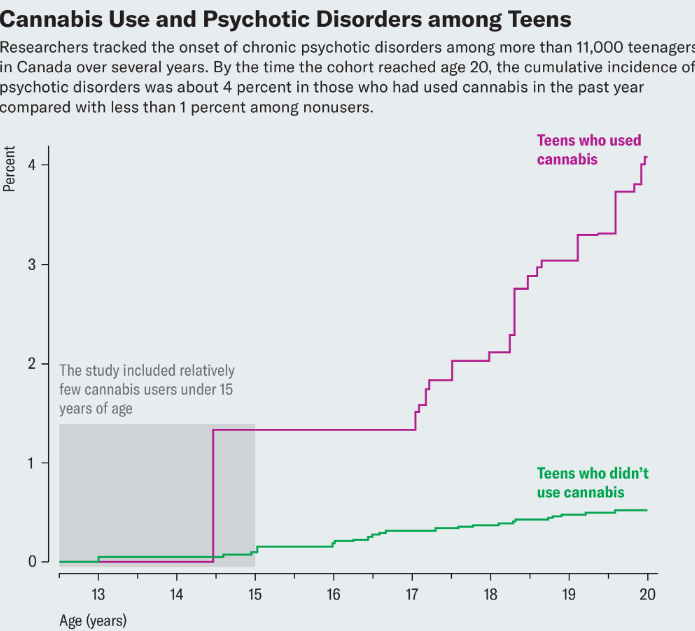
Cannabis Potency and Psychosis Risk in Teens
Modern cannabis contains far more THC than what parents once used, with average potency increasing 307% since the 1990s. A Canadian study of more than 11,000 teens found that cannabis users had an 11-fold higher risk of developing a psychotic disorder compared with nonusers. High potency, early use, and near-daily exposure appear to disrupt brain circuits still under construction in adolescence.
Do This: Talk openly with your teen about potency, set limits, and encourage at least short periods of abstinence to gauge how they feel.
Like this newsletter? Check out previous monthly newsletters.
P.S. Help me bring health and happiness to more people--share this link with your friends and family so they can also learn awesome stuff.
