
August 2026

How I Healed My Knee
Earlier this summer I had a great workout. At 6 am I was hitting a fast 5 miles with hills and intervals on a humid morning. It was days before a trip to Italy where I knew I’d be running less, so I pushed it. But I pushed it too hard that workout and that week leading up to it.
At first, I thought I had irritated my meniscus. Then I wondered if it was ligament-related. I have made sports medicine appointments in the past only to have the injury mostly resolve by the time the appointment came around, so with Italy coming up, I decided to give it some time before pursuing traditional treatment.
For the next month, it was inconsistent. Some days it felt almost normal. Other days, the first few steps of a run had me hobbling. Walking downstairs was sometimes worse than running. It was somewhere between obviously not normal and not bad enough that I thought I had seriously damaged something. But it was the summertime, I had a race coming up, and I was really just annoyed by it all.
So I pulled out pretty much everything I had.
Active rest. I never parked myself on the couch. Hikes, walks, and strength training still played their parts but in different ratios than I normally would use them.
Gradual loading. As the pain improved, I progressively brought back strength work, running, stairs, carries, and eventually higher-intensity training rather than jumping straight back into my normal volume. If I felt a twinge or any instability, the movement stopped immediately.
Strength training. I kept working the muscles around the knee, particularly the quads, glutes, hamstrings, calves, and hips. One of the most useful things you can do with many knee problems is improve the capacity of the tissue surrounding the irritated area. Another factor is to strengthen and improve mobility of the joint above and below the issue. This is especially true for elbows, hips, and knees.
Range of motion. I continued moving the knee through comfortable ranges instead of completely immobilizing it. More static stretching to tolerance and less dynamic stretching too.
Sauna. This was already part of my routine, but I used it consistently during the recovery period. It’s not a panacea, but there’s plenty of research showing that sauna can improve circulation, support sleep, reduce certain markers of inflammation, and promote recovery through heat acclimation and improved vascular function.
Red light therapy. I used red and near-infrared light around the knee regularly. There is some interesting research on photobiomodulation for pain, inflammation, and tissue recovery, although the results depend heavily on the condition, wavelength, dose, and device.
Thermo Recovery Knee Sleeves. I also used a Thermo Recovery Knee Sleeve during the day for extra support and warmth. The sleeve uses body heat-activated far infrared technology, and I found it comfortable enough to wear for longer periods without feeling restrictive. I cannot say how much the infrared component contributed, but keeping the knee compressed and supported seemed to help.
Supplements.
Digestive enzymes. Some research suggests proteolytic enzymes may help reduce inflammation, swelling, and strength loss while helping with short-term recovery after injury or surgery.
Essential amino acids. EAAs provide all nine essential amino acids the body cannot make on its own and are more complete than BCAAs alone. There’s mounting research on their use with injuries, so I added these in a few days a week when I was fasting.
Protein. I kept protein intake high (0.8-1g of lb/pound of body weight) through foods like eggs, meat, fish, and poultry while having my protein shake most mornings.
Creatine. I continued taking creatine daily (~10g).
Avoided NSAIDs. I also tried to avoid NSAIDs because they’ve been found to interfere with aspects of tissue repair and adaptation, particularly early in the healing process. They can also cause GI issues and carry cardiovascular risks with higher doses or longer-term use.
Sleep. Probably less exciting than red lights and recovery gadgets, but also probably more important. I made getting enough sleep a priority whenever possible.
Fast forward to this past weekend, where I finished 38th overall in a Spartan Stadion race with more than 2,000 participants.
This being an n-of-1 situation, I’ll never know how much the above helped (and I wouldn’t recommend relying on biohacking as a recovery tool for every injury), but the whole experiment did really reinforce something broader.
Recovery is one of the areas where having a strong locus of control can be useful. I could not instantly fix whatever irritated my knee, but I could control how I trained, how I slept, what I ate, how I managed the pain, and how gradually I returned to running.
There is a slew of research showing that psychological factors such as self-efficacy, expectations, fear of movement, and perceived control can influence pain and rehab outcomes. That does not mean an injury is purely psychological. It means recovery involves a nervous system and a brain along with muscles, tendons, ligaments, and joints.
Maybe one of the above factors made a meaningful difference, maybe all of them did. Maybe it was all just a matter of resting it and letting it heal on its own. I'll never know.
But going from hobbling down the stairs to racing competitively in a Spartan Stadion a couple of months later was a pretty good reminder that when something hurts, I would rather give my body as many reasonable advantages as I can while it heals
.
Brian
🏆 Stuff of the Month
🖋️ Articles
Is Your Food Fueling the Fire? Pro- and Anti-Inflammatory Foods Explained
21 Caffeine Myths: Heart Health, Dehydration, & Lethal Doses
🎙️ The Growth Kit (Podcast)
Full list of episodes here. Subscribe to your favorite podcast player (Spotify, Apple).


🥇 Best of the Month
“Only while sleeping one makes no mistakes. Making mistakes is the privilege of the active.”
—IKEA founder Ingvar Kamprad
🎧 Podcast: Kids, Competition, and Performance by Parenting Beyond Discipline
📖 Book: Balanced and Barefoot: How Unrestricted Outdoor Play Makes for Strong, Confident, and Capable Children by Angela J. Hanscom
🎁 Product: Lumen. You breathe into it and get a 1 to 5 score estimating whether you are burning more fat or carbs, which makes it surprisingly useful for tracking how food, fasting, training, and recovery affect metabolism.
Use MINDBODYDAD for 15% off.
❓ Question of the Month
Q: Does the thickness of foods like butter or margarine actually clog your arteries?
No. This is a common misconception, partly fueled by decades of advertisements that showed greasy foods "coating" arteries like clogged pipes. In reality, that's not how your body works. After you eat fat, it is emulsified by bile, broken down by pancreatic lipase, absorbed in the small intestine, and packaged into lipoproteins called chylomicrons before entering the bloodstream. Research finds that it does not circulate as melted butter or physically stick to your arteries.
Atherosclerosis is a chronic inflammatory disease, not a plumbing problem. It begins when apolipoprotein B (apoB) containing lipoproteins, particularly LDL particles, become trapped within the arterial wall, triggering inflammation that gradually leads to plaque formation. Butter can increase LDL cholesterol in many people because of its saturated fat content, but the risk comes from its effects on blood lipids over time, not because it physically clogs arteries.
Do this: Don't judge a food by how thick or greasy it looks. Focus on dietary patterns that improve your cholesterol, blood pressure, and overall cardiovascular health. Check out this article for optimal ranges of cholesterol and what you should check.
⏱️ Brutal by Design
Carry Yourself
Purpose: This leans into loaded carries, strength endurance, grip, trunk stability, and hard conditioning.
Workout (4 rounds):
Farmer carry: 60 seconds, heavy
Kettlebell swings: 20 reps
Walking lunges: 20 total, holding dumbbells or kettlebells
Push-ups: 20 reps
Bear hug carry: 60 seconds with a sandbag, heavy bag, or awkward object
Burpees: 10 reps
Run: 400 meters hard
Optional Misery: Finish with a 10-minute ruck carrying 1/3 of your body weight.
💡 Things I’ve Learned
🧠 Mind
Your Sleep Mindset May Affect Your Brain
What if simply believing you slept well could change how well your brain performs? Researchers randomly gave participants fake feedback indicating they had either 28.7% REM sleep, “above average,” or just 16.2%, “below average.” Those told they slept better subsequently performed better on certain tests of attention and verbal fluency. Interestingly, participants’ perceived sleep quality predicted performance better than their self-reported sleep quality on those tasks.
Do this: Don’t let one bad sleep score convince you that your day is doomed. Treat wearable sleep data as information, not a verdict on how your brain will perform. In fact, if you feel like you slept pretty well, don’t even look at the data.
Could Omega 3 Supplements Actually Accelerate Cognitive Decline?
A surprising 2026 longitudinal study using Alzheimer’s Disease Neuroimaging Initiative data found that older adults taking omega-3 supplements experienced faster cognitive decline across three measures, including the MMSE, ADAS Cog13, and CDR SB. The relationship wasn’t explained by amyloid, tau, or brain atrophy. Instead, reduced glucose metabolism in Alzheimer’s vulnerable brain regions partially mediated the association.
That doesn’t necessarily mean omega-3s are harmful. Researchers and Examine highlighted another possibility: oxidized or poor-quality fish oil. These fats are vulnerable to oxidation, making supplement freshness and manufacturing quality potentially important variables that this study couldn't directly evaluate.
Do this: Don’t throw out your fish oil based on one study, but don’t assume supplementation protects your brain either. Prioritize omega-3-rich foods such as salmon, sardines, and trout and consider high-quality fish oil only.
The House Is Winning More Than Ever
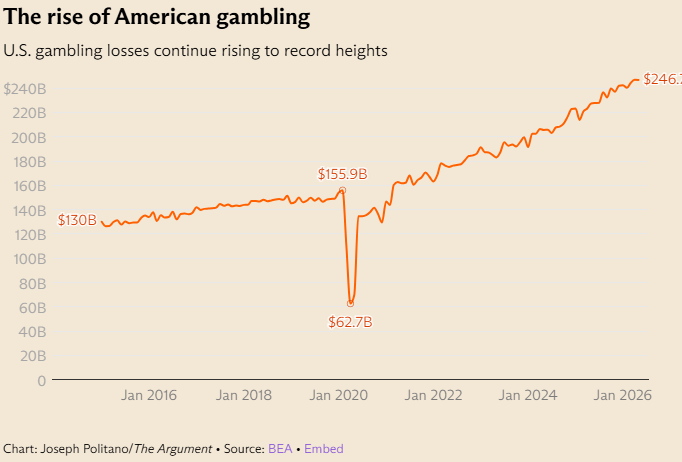
Americans are on track to gamble away a staggering $250 billion this year. Gambling losses have reportedly climbed 67% since 2020, fueled partly by the rapid expansion of legal sports betting and apps that put a casino in your pocket 24/7. New York Fed economists found sports betting legalization was associated with higher debt delinquency, with particularly pronounced effects among younger men. The scary part is how little friction exists between the urge to bet and actually putting money on the line.
Do this: Make gambling entertainment, not an investment strategy. Set a hard monthly limit, disable deposits when you hit it, and never chase a loss.
💪 Body
Can Vitamin K2 Slow Calcium Buildup in Your Arteries?
In a randomized trial of 180 adults with coronary artery disease, 360 mcg of MK 7 daily for two years was associated with about 29% less coronary calcium progression and 42% less calcium mass progression compared with placebo. That’s encouraging, but we don't know whether these changes translate into fewer heart attacks or strokes. Calcification can also sometimes represent greater plaque stability rather than simply worsening disease.
Do this: Consider K2 promising, not proven cardiovascular protection. Focus first on established risk factors such as LDL cholesterol, blood pressure, exercise, smoking, and diet, and talk with your doctor before adding K2, particularly if you take a vitamin K antagonist such as warfarin.
Drop Sets Build Muscle in Half the Time
A meta-analysis of 12 trials and 274 adults found that drop sets produced similar improvements in muscle mass, strength, and muscular endurance as traditional resistance training while taking roughly 33-50% of the time. The tradeoff was greater short-term fatigue, perceived effort, and lactate.
Do this: Use drop sets when you're short on time. Take a set near failure, reduce the weight, and immediately continue for more reps. Repeat as desired. I like them as an occasional finisher rather than replacing most traditional sets.
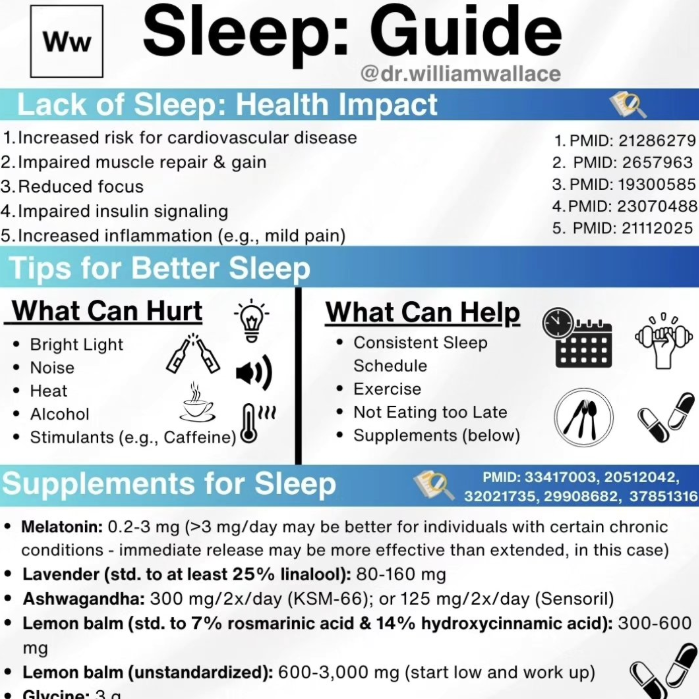
Hitting the Sleep Basics with Dr. William Wallace
🎯 Dad
Multiple Birth Risk Factors Could Be a Red Flag
This study suggests the combination of prenatal and perinatal risks may matter most. In this sample, two of the six strongest factors were linked with an estimated 80% probability of SPD, rising to 90% with three. Examples include prematurity, low birth weight, neonatal hypoxia, and birth complications.
A newer nationwide study of 6.8 million children found similar risk factors across ADHD, autism, learning disorders, communication disorders, and intellectual disability. Overall, 7.5% of children had at least one neurodevelopmental disorder.
Do this: Use birth history as context, not a diagnosis, especially when multiple risk factors occur alongside persistent sensory, motor, behavioral, or participation problems.
When Helping Your Kids Too Much Hurts
Parents today often remain deeply involved in their children's lives for longer, partly because financial and social independence are happening later. A 2025 review argues that when this extended support becomes overparenting, it may actually undermine independence and contribute to poorer mental health.
Do this: Before stepping in, ask, “Can my child reasonably handle this themselves?” If yes, give them the opportunity.
Dad’s Health May Affect His Kids Before They’re Even Born
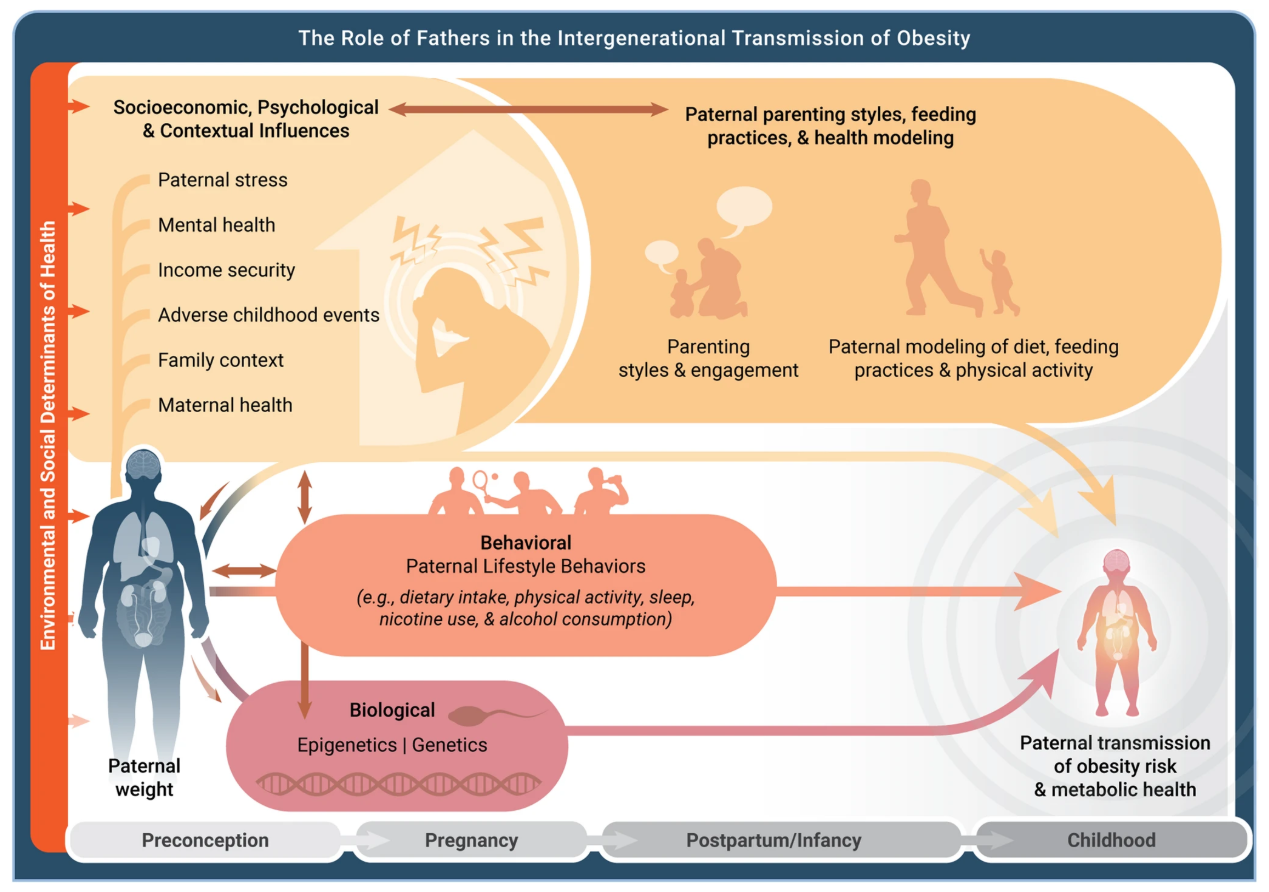
A 2026 review highlights how fathers may influence their children’s obesity risk through biological, behavioral, and shared family environmental factors. Paternal obesity has been associated with alterations in sperm epigenetic signatures, while a father’s diet, physical activity, feeding practices, and parenting behaviors can further shape a child’s habits after birth.
Perhaps most interestingly, some sperm epigenetic changes appear to be modifiable through preconception lifestyle interventions. Dad’s health before conception may matter more than we once thought.
Do this: If you're planning to have children, treat the months before conception as a health opportunity for both parents. Exercise, improve diet quality, maintain a healthy body composition, prioritize sleep, and limit smoking and excessive alcohol.
Like this newsletter? Check out previous monthly newsletters.
P.S. Help me bring health and happiness to more people--share this link with your friends and family so they can also learn awesome stuff.
