
March 2026
Living My Obituary
A few weeks ago, we celebrated the life of my Godfather after a decade-long decline with dementia.
The reception after the funeral was anything but somber, though. It was full of stories, laughter, grin-inducing memories, and ‘Remember whens’. In other words, it was the kind of gathering that reminds you what actually matters.
Not a single person talked about what he earned, what he owned, or his golf handicap.
They talked about how he showed up, how he treated people, and the lasting impressions he made on them.
Maya Angelou’s popular quote reflects this:
“People will forget what you said, people will forget what you did, but people will never forget how you made them feel.”
Many times in life, I feel like I’m just unconsciously trying to build my résumé when I forget that no one really cares what that looks like. So, instead of a resume, I’ve been trying to live my obituary. I learned about this concept years ago and it’s deaths like Uncle Steve’s that remind me about it. A résumé is what we build with achievements, promotions, milestones, etc. It’s outward-facing, built for approval, and focused on what we’re supposed to optimize in the eyes of people who can give us more status.
Obituaries, on the other hand, are the emotional residue of a life. It’s the 150 words that your 700 million lifetime breaths are distilled down to. It’s the abstract, the emotions you created, the relationships you built, and the moments people carry with them long after you’re gone.
If you’ve done it right, it’s beautiful, inspiring, and a reflection of what truly matters.
Inspired by my Godfather’s life, I wrote my own obituary. It’s not something I plan to share here, but it was revealing, and I plan to use it as a North Star when I start drifting.
It’s absent of permanence or creating any type of legacy. Your money runs out, your accomplishments fade, and the last time someone ever says your name isn’t too many generations from now. My obituary is focused on less regret, more gratitude, and being someone who consistently leaves people feeling better about themselves. Being a better husband, father, son, brother, friend, and therapist. Less chasing, more enjoying. More deep breaths, less rushing. Slowing down, taking deep breaths, listening fully, choosing connection over distraction, and remembering that I will die in the not-too-distant future.
That’s mine, though.
What’s yours? What will you leave behind?
Write it down. Then start closing the gap between the life you’re living and the life you actually want. Save it. Revisit it once a year. Adjust as needed. Keep it close enough that it shapes your decisions before it’s too late.
Thanks for the inspiration, Uncle Steve.
-Brian

🎙️ The Growth Kit (Podcast)

Full list of episodes here. Follow The Growth Kit on Instagram. Subscribe to your favorite podcast player (Spotify, Apple). And please leave a review!
🥇 Best of the Month
“Failure is not necessarily durable. Remember that the things that they fire you for when you are young are the same things that they give lifetime achievement awards for when you’re old.”
—Robert Rodriguez
🎧 Podcast: Dr. Hyman Mitochondrial Health: The ultimate guide to feeling your best
📖 Book: Red Rising by Pierce Brown. This is a bit off topic for the health-minded focus I usually focus on but it’s well worth it. I just hosted a book club with some friends and this was the one I chose. So good.
🎁 Product: GORUCK Rucker 4.0
❓ Question of the Month
Q: Standing desk: worth it or overrated?
A: Most adults sit 8-10 hours per day, and desk workers often exceed that. Prolonged sitting has been linked with higher risks of heart disease, type 2 diabetes, and early death (even in people who exercise regularly).
Standing desks are not a panacea, but they are a simple way to break up long stretches of sitting.
Research shows that sit-stand desks reduce sitting by about 60-100 minutes per workday. In one workplace study, employees who used standing desks reported a 54% reduction in upper back and neck pain after several weeks. Other studies show modest improvements in energy, mood, and productivity.
Standing more can also help metabolically. In one small study, alternating between sitting and standing after meals reduced post-meal blood sugar spikes by about 11% compared with sitting all afternoon.
That said, standing all day is not the goal. Standing burns only slightly more calories than sitting (roughly 8-10 extra calories per hour). The real benefit comes from changing positions and moving more often.
Use this approach: alternate between sitting and standing every 45 minutes. Additionally, take a short walk when you can (though faster and longer is better), and if you really want to improve your health, do a microworkout by performing 1 minute of bodyweight squats, push-ups, or stair climbing.
My take: A standing desk is worth it if it helps you sit less and move more. The real win is breaking up long stretches of sitting. Put another way: the best posture is the next posture.
⏱️ Brutal by Design
The “Bring Sally Up” Push-Up Challenge
Hat tip to my friend Bob P. for this one.
Purpose: Build serious push-up strength and muscular endurance using tempo, isometric holds, and time under tension.
Equipment: Floor and the song “Flower” by Moby.
Workout:
Start a push-up in the top position.
When the song says “Bring Sally up,” push up to the top.
When the song says “Bring Sally down,” lower yourself and hold the bottom position until the next cue.
That’s it. Can you last the ~3:30 song?
Tip: Probably not so, do as I’m working on and go to about half of what you can max out at (e.g. if you can do 1 minute then do 30 seconds) and repeat that 5 times with 3-minute breaks a few times a week, gradually building up the time per set.
My status: Maxing out at 1 min and 50 seconds to go. I’ve got a ways to go.
💡 Things I’ve Learned
🧠 Mind
Are We Underestimating Cannabis Risk?
Cannabis and driving is becoming a bigger issue than most people realize. A recent analysis found that 41.9% of drivers killed in crashes had active THC in their system, often at levels far above impairment thresholds. Legalization didn’t change the trend, which suggests behavior hasn’t shifted. What stands out is the perception gap. Many still believe driving high is safer than driving drunk, but reaction time, attention, and decision-making all take a hit. Is this similar to early seatbelt or smoking data, where awareness lagged behind reality?
Do this: Treat cannabis like alcohol. If you’ve used it, don’t drive.
Less Parties, More Problems
The American Time Use Survey had some wild findings:
Time spent attending or hosting social events has dropped 50% since 2003
Ages 15 to 24 are spending 70% less time at parties compared to 2003
Men who watch TV spend about 7 hours watching for every 1 hour socializing outside the home
The average female pet owner spends more time with her pet than with all humans combined
Social connection is linked to lower depression, better heart health, and longer lifespan. Some estimates suggest loneliness carries a risk similar to smoking 15 cigarettes per day.
My take: Socialization is underrated. You can get everything else right, but if your social life is shrinking, it is going to impact your health, mood, and overall quality of life.
Do this: Schedule one standing weekly hangout and treat it like a non-negotiable. Say yes to more. Awkiwardness is okay too.
Would You Return the Wallet?
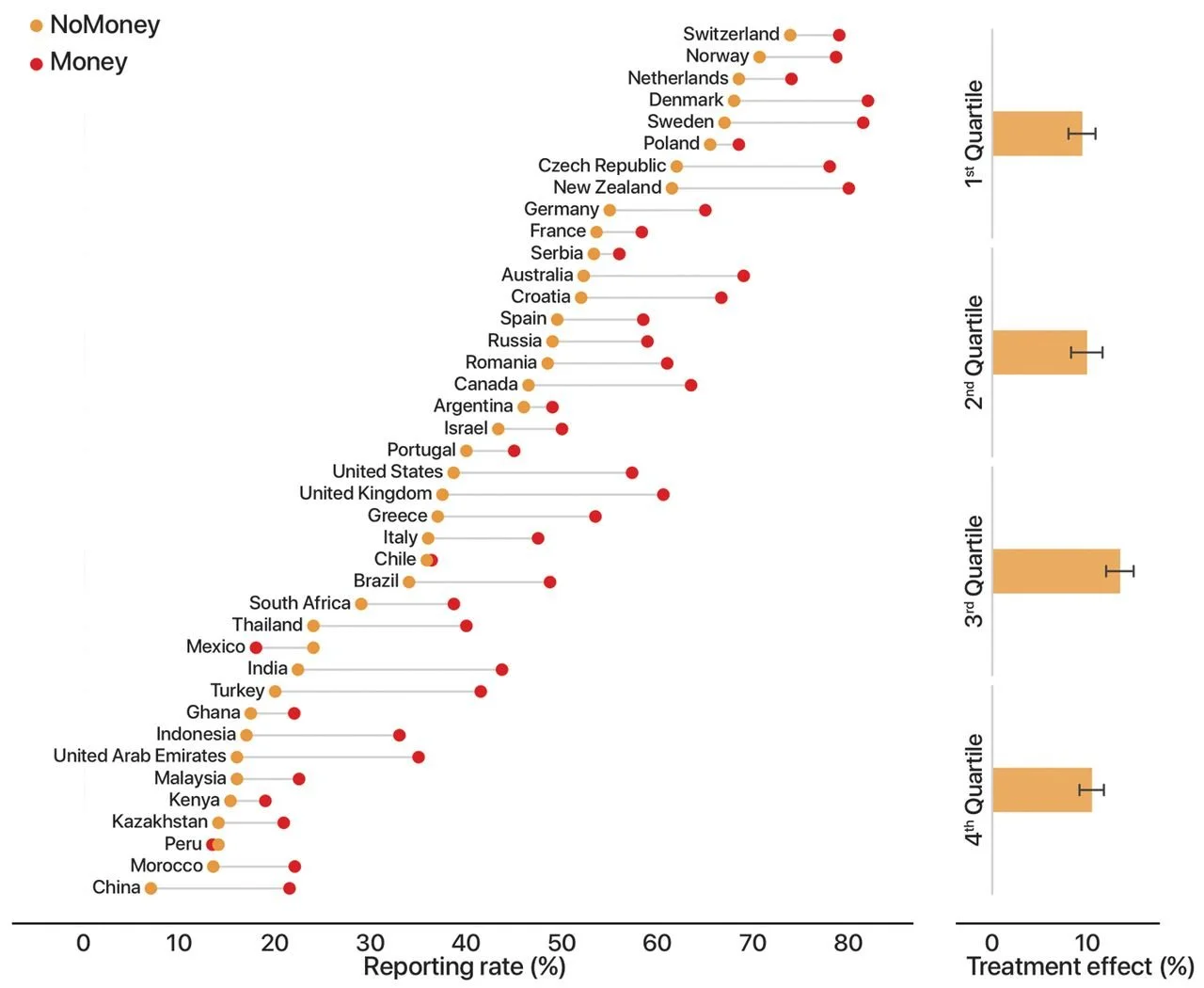
A fascinating global study dropped 17,000+ lost wallets across 40 countries to see what people would do. The surprising result was that people were more likely to return wallets that had money inside. Even when the amount increased, honesty went up, not down. This varied with the country, though (we didn’t do so hot USA). One theory is that this is because people care about how they see themselves. The more money involved, the more it feels like stealing.
💪 Body
A Workout That Shrinks Plaque?
A study in the European Journal of Preventive Cardiology looked at whether exercise can actually impact plaque in your arteries. Here’s what they found:
2 HIIT sessions per week reduced coronary plaque volume
Plaque reduction was similar to some statin effects
VO2 max, waist size, and BMI all improved alongside these changes
My take: This study helps reverse a trend of the “permanence of plaque.” You have the tools to reduce itspo use it.
Do this: Add 1 to 2 HIIT sessions per week. Even short intervals can move the needle.
UPF Increases Heart Disease Risk by 47%!
A recent study looked at ultra-processed food (UPF) intake and heart disease risk in U.S. adults. People who consumed the highest amounts had a 47% higher risk of cardiovascular disease. These foods now make up about 60% of the average U.S. diet, largely driven by added sugars, refined ingredients, and industrial processing.
My take: this is one of the biggest levers in nutrition right now. You don’t need to overhaul everything, but reducing ultra-processed foods is one of the simplest ways to improve long-term health.
Do this: Swap out one ultra-processed food each day for a whole food alternative. If your great grandparents couldn’t eat it, ditch it.
White Noise for the Win
We tend to blame loud environments for poor sleep, but the bigger issue is sudden changes in noise. In one study, sleep disruptions jumped from 13 to 48 arousals per hour with ICU noise, but adding white noise brought it back down near baseline. Basically, white noise smooths the gap between silence and sudden spikes in noise, making those disruptions less noticeable to your brain.
Do this: Try a consistent background sound at night. A fan or white noise machine can help stabilize sleep.
🎯 Dad
1 in 11 Preterm Births Linked to Plastics
We talk a lot about plastics and health, but this puts numbers to it. A recent model estimated that ~1.97 million preterm births globally (about 8.7%) were linked to phthalates, chemicals commonly found in plastics. That includes ~74,000 deaths and millions of years of life lost. What amazes me is how widespread the exposure is. These chemicals are in food packaging, personal care products, and everyday items.
Do this: So swap plastic food containers for glass, avoid microwaving anything in plastic, choose fragrance-free personal care products, avoid non-stick pans, and limit fast food.
The Sunlight and MS Link
A study on pediatric MS found something interesting. Kids who had ≥30 minutes of daily sun exposure in their first year of life had a ~33% lower risk of relapse later on. Even prenatal exposure mattered, with similar reductions seen during pregnancy. What stands out is timing. Early exposure seems to matter more than later exposure, suggesting a developmental effect on the immune system.
Do this: Ignore the naysayers. The sun is good. Get consistent, moderate sun exposure daily.
The “2–3 Kids” Longevity Sweet Spot?
A large study found an interesting pattern. Women with no children or a high number (around 6-7) showed higher mortality risk and faster biological aging, while those with ~2-3 children had the lowest risk. The explanation may come down to energy. More resources toward reproduction can mean less for repair and longevity, a concept known as the “disposable soma” theory.
Do this: Don’t overinterpret this. This is interesting, but not destiny. Focus on controllables like sleep, nutrition, and stress, which likely matter far more.
Like this newsletter? Check out previous monthly newsletters.
P.S. Help me bring health and happiness to more people--share this link with your friends and family so they can also learn awesome stuff.
