
April 2026

The Case for Choosing Hard Things
The last handful of months have been wild.
On top of the standards like work and dad life, my demands have been stacking up. School assignments (I’m back in school for my doctorate), picking up the required weekends at the hospital, increasing demands of the blog, teaching at my alma mater for a weekend, social trips, and kids’ activities.
Everything individually is awesome (except the weekend working part). Everything at once is a lot.
It would’ve been easy to feel overwhelmed. Instead, I kept coming back to one thought: I chose every piece of this, and it is for the better.
That mindset shift is important. It’s so easy to complain. It’s so difficult to think, “This will make me better.”
Not everything in life is chosen. Some situations get handed to you. Unexpected stress, setbacks, responsibilities you didn’t ask for. That’s real.
But even then, you still control how you respond. You still choose your standards, your effort, and your direction forward. (Or, more simply as a mantra I use with my kids, attitude and effort.)
There’s a reason we lean into difficult paths, even when easier options exist. The best ones tend to give us three things, rooted in Self-Determination Theory:
Autonomy. The ability to choose your direction.
Mastery. The drive to improve and get better over time.
Purpose. Doing something that actually matters.
When those are in place, hard feels worth it.
It’s hard for me to appreciate the journey when the stress piles on but it’s something I’ve been working hard on. Gratitude, gratitude, gratitude. I’m grateful for a full plate. I’m not wired to coast or check out every night. The work, the progress, the climb.
That’s the point and it’s an integral part of a beautiful life.
There’s no finish line where everything suddenly settles down but there is a finish line for us all in the end. You don’t need to rush and cram everything in, but you should be intentional about how you spend your time.
A full life comes with friction. The key is making sure the kind that builds you, not drains you.
As you make the thousands of choices you make every week that ultimately form your life, remember to build a life that elevates you and others, but more importantly, one you actually appreciate.
-Brian

🎙️ The Growth Kit (Podcast)

The Anti-Anxiety Diet: 5 Science-Backed Nutrients to Reduce Anxiety & Stress
Musculoskeletal Injury: Sprain, Strain, or Break? (& What To Do About It)
Full list of episodes here. Follow The Growth Kit on Instagram. Subscribe to your favorite podcast player (Spotify, Apple). And please leave a review!
🥇 Best of the Month
“Enough is as Good as a feast.”
—Sir Thomas Malory
🎧 Podcast: The Psychology of Winning | Michael Johnson by Finding Mastery with Dr. Michael Gervais
📖 Book: Raising Mentally Strong Kids by Daniel G. Amen, MD and Charles Fay, PhD
🎁 Product: The Everblog HomeCal™. Our new, awesome home organizer.
❓ Question of the Month
Q: What’s the deal with inflammation, and how do I reduce it?
A: Inflammation is your body’s repair system, but when it becomes chronic, it turns into a problem. Nearly 60% of U.S. adults have at least one chronic disease, and low-grade inflammation is a major driver behind conditions like heart disease, diabetes, and cognitive decline. Even slightly elevated CRP levels above 1.0 mg/L are associated with increased cardiovascular risk.
Most chronic inflammation comes from daily inputs: ultra-processed foods, poor sleep, stress, inactivity, and excess visceral fat. One study found that just one night of poor sleep can increase inflammatory markers, and losing 5-10% of body weight can significantly reduce them.
How to reduce it (beyond the basics):
Walk after meals: improves blood sugar and reduces inflammatory spikes
Lift weights: resistance training lowers CRP and IL-6 over time
Cold exposure or sauna: both can reduce inflammatory signaling and improve recovery
Eat polyphenol-rich foods: berries, olive oil, dark chocolate help blunt inflammation
Get morning sunlight: supports circadian rhythm and lowers stress-related inflammation
How to measure it:
Bloodwork: CRP, hs-CRP, fasting insulin, HbA1c
Waist circumference and body composition
Resting heart rate and HRV trends
⏱️ Brutal by Design
VO₂ Max Workout (Norwegian 4×4 Protocol)
Purpose: Maximize VO₂ max, stroke volume, and cardiovascular efficiency using one of the most validated interval structures.
Equipment: Treadmill, bike, rower, or outdoor running route
Workout:
Warm-up:
5 to 10 minutes easy aerobic pace
2 short build-ups (20 to 30 seconds each)
Main Set:
4 rounds of:
4 minutes hard effort (aim for 85 to 95% max heart rate)
3 minutes easy recovery (slow jog, walk, or light spin)
Cooldown:
5 to 10 minutes easy
Tip: The first interval should feel controlled. By the third, you should be questioning your life choices. If you blow up early, you went too hard.
Optional Misery: Add a 2-minute all-out effort after your last recovery.
💡 Things I’ve Learned
🧠 Mind
Breaking Up Culture is Rising Fast
About 50% of relationship advice on Reddit now suggests ending it, up from ~30% in 2010. Meanwhile, “Communicate” dropped from 22% to 14%, “Give space” from 25% to 13%, and “Compromise” from 7% to 3%. Conclusion: Effort-based advice is fading. Because platforms like Reddit heavily influence training data, tools like ChatGPT may lean toward advising breakups more often.
Do this: Before ending it, ask yourself if you’re avoiding discomfort. If yes, choose one uncomfortable but honest conversation this week.
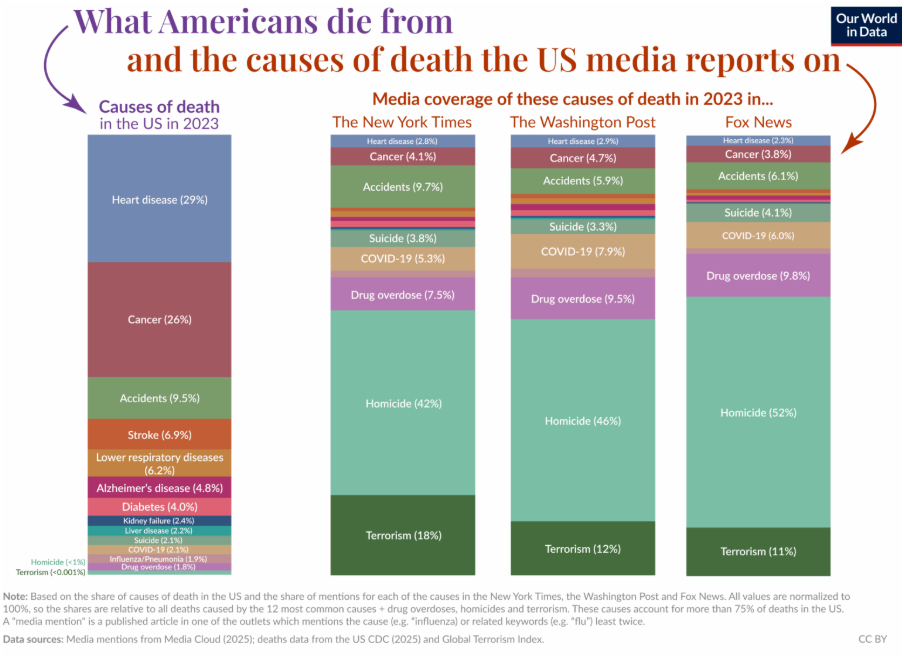
What We Die From vs. What the News Reports
An analysis from Our World in Data shows a huge gap between what actually kills Americans and what gets covered in the news. Heart disease accounts for about 29% of deaths and cancer 26%, yet they receive minimal coverage. Meanwhile, rare events like homicide and terrorism are heavily overrepresented. News prioritizes what is unusual, immediate, and emotionally charged. Chronic diseases are slow, predictable, and less attention-grabbing.
Do this: Shift your focus from headlines to habits. The biggest gains still come from controlling blood pressure, staying active, and improving diet.
Does Optimism Actually Extend Life?
In a large study of over 70,000 people, those with the highest levels of optimism lived 11-15% longer on average compared to the least optimistic. Even more interesting, the most optimistic individuals had 50-70% higher odds of living past age 85. These effects held up even after accounting for health, lifestyle, and socioeconomic factors. Optimism likely works through better habits, lower stress reactivity, and stronger long-term decision-making.
Do this: Practice reframing challenges. Think “this is manageable” instead of “this is overwhelming.” Also, hang out with optimistic people and avoid the pessimists.
💪 Body
One Lazy Day Can Impact Your Workout
In this study, participants who were inactive the day before exercise burned more carbohydrates and less fat during the same workout. Triglycerides were also higher, pointing to worse fat metabolism. Even more interesting, inactivity nearly doubled the gene response to exercise, especially in pathways tied to inflammation and metabolism. This is what researchers call exercise resistance. Your body becomes less responsive to the benefits of training when overall daily movement drops, even if you’re still hitting your workouts.
Do this: Rest days are okay but don’t confuse rest with inactivity. Light movement, like walking, keeps your system primed for better performance.
Why Glycine Might Help You Sleep Through the Night
A small study looked at whether glycine, a simple amino acid, could improve bladder symptoms. After taking 3g twice daily, participants saw reductions in nighttime urination, urgency, and overall symptom scores. Sleep improved too, including a longer time before first nighttime urination and a shorter time to fall asleep. Even blood pressure dropped slightly, with no reported side effects.
Do this: If nighttime urination is an issue, consider testing glycine before bed. Start low and track sleep and bathroom frequency.
The Goldilocks Zone of Dairy Intake
A meta-analysis of 29 cohort studies with 1.68 million people found a clear pattern. Moderate dairy intake was linked to better outcomes, especially for heart health. Yogurt stood out with 200g per day being associated with ~11% lower risk of both all-cause and cardiovascular mortality, while milk and cheese showed smaller benefits mainly for heart disease.
There was also a ceiling. Benefits increased up to about 250-300 g per day, then started to level off or reverse.
Do this: Aim for moderate dairy, not extremes. Yogurt is likely the best place to start if you tolerate it well.
🎯 Dad
Exercise During Pregnancy May Shape Your Child’s Brain
A massive study of 38,000+ mother-child pairs found that maternal physical activity before and during pregnancy was linked to better early childhood development. At 6 months, higher activity levels were associated with up to 60% higher odds of better fine motor skills and meaningful improvements in gross motor and problem-solving domains.
Do this: If pregnancy is uncomplicated, stay moderately active. Even simple movement may support early brain and motor development.
Early Food Mistakes Add Up
A study of 2,077 children found that ultraprocessed foods made up ~45% of daily calories at age 3, and higher intake was linked to worse behavioral outcomes by age 5. For every 10% increase in ultraprocessed food intake, there were measurable increases in internalizing and externalizing behavior scores. On the flip side, replacing just 10% of calories with minimally processed foods improved behavior scores across the board.
Do this: Focus less on perfection and more on swaps. Replace a portion of processed snacks with whole foods consistently.
Kids Are Expensive
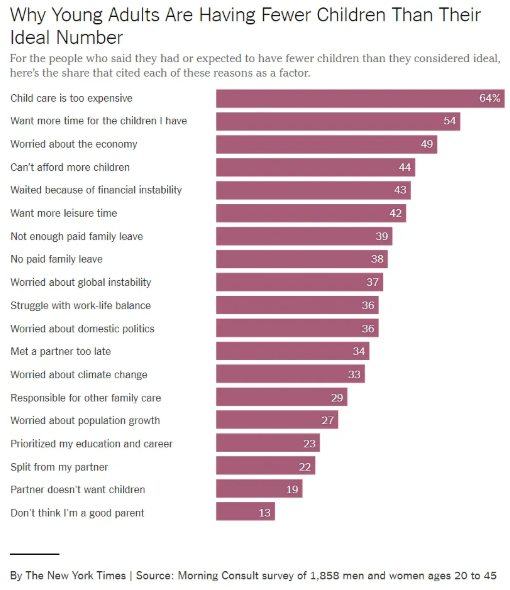
Estimates suggest it costs $230,000+ to raise a child to age 17, and likely closer to $270,000 today. Child care alone can exceed $10,000 per year for many families. Financially, childless couples tend to come out ahead, with higher incomes and net worth. Parents also report higher financial stress. The good news for parents is that they report greater meaning, purpose, and connection, even if stress and fatigue are higher.
The author of this piece, Jacob Schroeder, puts it beautifully:
“The cost of children is an admission to adventure, love, pain, joy, despair, loss, fulfillment – all that life can and should be. Then one day it’s over. The ride comes to a stop – hopefully, much later than sooner – and that emptiness is a bittersweet debt. It is a debt that can never be repaid. You are left desperately wishing to repay it only to take it out again so you can relive it all over, desperately wishing to take out a second mortgage on all the spills, the cuts and bruises, the breaks, the heartaches, the tears, the smiles, the hugs, the laughs, the I love yous and the goodbyes, enough to get you angry at the unfairness of it all.
Damn kids.”
Like this newsletter? Check out previous monthly newsletters.
P.S. Help me bring health and happiness to more people--share this link with your friends and family so they can also learn awesome stuff.
